
Return to Silent Hill Review: A Cult Legend Returns — and Still Can’t Find Its Footing
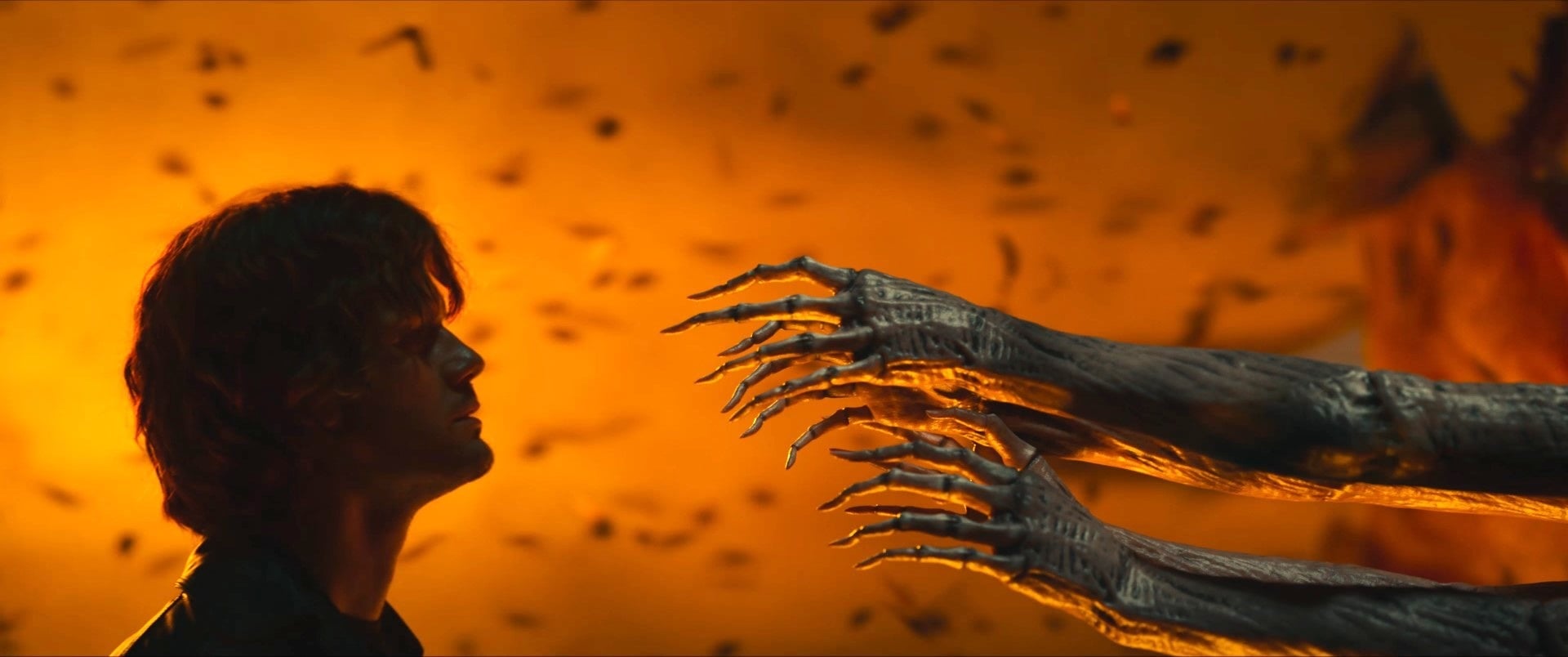
Return to Silent Hill arrives in theaters 20 years after its progenitor, a film that has become a curious, beloved oddity in the horror sphere more for its ambition than its execution. Directed once again by Christopher Gans, the movie re‑enters the ash‑strewn, fog‑shrouded nightmarescape of Silent Hill — this time borrowing its core narrative from the seminal video game Silent Hill 2.
But despite the franchise’s rich lore and the genuine affection it inspires among fans, Return to Silent Hill struggles to translate those elements into a coherent, compelling cinematic experience.
Where many video‑game‑to‑film adaptations fall short, this one attempts something darker, more introspective — only to falter under the weight of its own atmospheric aspirations.
A Director Haunted by His Own Creation
Revisiting a franchise after two decades is an act of loyalty as much as it is nostalgia. Gans’s original Silent Hill (2006) never truly scaled the heights of genre classics, yet it garnered a cult following. That first film’s foggy visuals, unsettling sound design, and lingering sense of unease offered something distinctive at a time when horror adaptations were still finding their footing. Return to Silent Hill brings Gans back into that world, and it’s tempting to read that return as a deeply personal creative mission: a director circling back to reshape something he never fully outgrew.
Where Return to Silent Hill stumbles, however, is not in its fidelity to the source material — it does many things right in that regard — but in its inability to translate the gameplay experience into compelling dramatic momentum. Silent Hill games are, at their best, about exploration, atmosphere, and dread rooted in psychological ambiguity. Translating that into a film narrative requires a different set of tools — and Gans still has not quite mastered them.
Plot: The Familiar Become the Frustrating
At its core, the story centers on James (Jeremy Irvine), a painter defined by a kind of willful impulse rather than decisive action. Early in the film, James has a chance encounter with Mary (Hannah Emily Anderson), a woman whose attempt to leave her hometown is thwarted in the most unconvincing way possible. Despite this, the two fall in love quickly — perhaps too quickly for dramatic investment — and James soon relocates to Mary’s unsettling town.
From a screenwriting perspective, this setup teeters on convenience. Mary’s reluctance to leave is introduced with the narrative frailty of an afterthought, leaving audiences to wonder why James commits so fully to a relationship that initially feels underdeveloped. As the film unfolds, much of their backstory is revealed through flashbacks, a structural choice that briefly lends the narrative a haunting, mythic quality missing from the original film. We see James and Mary bound by an emotional intensity that — on paper — should root the viewer in their plight.
But in execution, the effect is muted. The emotional stakes never quite crystallize. Instead, the audience is left following James into Silent Hill not because his love is palpable or convincing, but because the narrative demands it.
Once James receives a mysterious letter implying that Mary may still be alive — and somewhere inside Silent Hill — he drives into that cursed town with a mix of determination and obliviousness that defines the film’s core problem: our protagonist never reacts like someone in genuine terror. Instead, James wanders forward, stoic and curious, even when confronted with harrowing sights and social decay. At one point, a filthy, wounded man pauses from vomiting into a rusted toilet long enough to declare Silent Hill “one big cemetery” — and James almost shrugs before continuing. It’s a curious approach to horror: relentless forward motion without emotional reaction.
This repeated passivity transforms James into less of a character and more of a cipher wandering through mood pieces. A horror movie needs fear — or at least palpable dread — but Gans substitutes that with a stoic march through beautifully crafted but hollow environments.
Atmosphere and Visual Identity: Rich, But In Service of What?
Where the film succeeds most is in its visual world‑building. Silent Hill has always been a setting defined by atmosphere: fog, ash, rusted metal, peeling paint, and silence that feels heavier than sound. Return to Silent Hill captures this beautifully. The design team deserves credit for conjuring a setting that feels mystically oppressive and structurally alien. The town itself remains a character — one that looms without explanation, a place where nightmares have settled into quotidian existence.
There are truly memorable visual sequences. A horde of grotesque creatures — somewhere between hairless rodents and xenomorph‑like nightmares — emerges with an aesthetic that’s both repulsive and strangely fascinating. There are moments where the film feels almost painterly: mirrors fractured into fragments showing glimpses of another world, corridors that hint at infinite loops, shadows that move with uncanny life.
In one striking motif, James’s therapist (Nicola Alexis) appears in fractured mirror reflections throughout much of the movie’s first half. It’s an evocative choice — a visual metaphor for fragmented psyche and identity — but it never transcends metaphor to deepen our understanding of James’s internal landscape. Without strong character grounding, these artistic flourishes feel like stylistic indulgences rather than narrative anchors.
Performance: Committed, But Weightless
The cast performs admirably within the constraints of the script. Jeremy Irvine’s James carries a muted intensity: there is something quietly obsessive about his dedication to Mary, yet that same quietness undercuts emotional connection. He never quite convinces as a man unraveling, which is central to Silent Hill 2’s original appeal — a story of guilt, grief, and fragmented psyche.
Hannah Emily Anderson’s Mary is enigmatic by design, but the film never gives enough of her interior life to anchor the audience in her stakes. The result is a performance that hovers in the valley between mystery and underdevelopment. Supporting characters occasionally break through with compelling beats, but the lack of depth in the central relationship undermines their impact.
Pacing and Structure: Wandering Through the Ash
One of the recurring criticisms of Return to Silent Hill is its pacing — specifically, how much of the film consists of aimless wandering through the town’s eerie landscape. In a video game context, this sense of exploration is immersive and engaging; horror games masterfully make players feel the unknown. But film, with its temporal limitations and narrative expectations, suffers when exploration replaces direction.
Gans seems drawn to the open‑ended quality that defines many horror games — the sense that the map itself is an adversary. But what works in gameplay often fails on screen: players can linger, retrace steps, inspect every surface. Audiences watching a two‑hour film want narrative propulsion. Instead, Return to Silent Hill often feels like a series of disjointed encounters, each more visually striking than the last, but lacking cumulative narrative weight.
The flashbacks, while providing mystery, do not establish a solid enough emotional baseline. So when the film pivots between past and present, the transitions do little to deepen our investment. Instead, they reinforce the film’s overall dream‑logic structure — surreal and atmospheric, but emotionally nebulous.
Perhaps this is intentional: Silent Hill has always thrived on ambiguity, on blurred lines between reality, guilt, and psyche. But ambiguity without anchoring emotional context can drift toward detachment.
Sounds of Silence: Score and Sound Design
One area where Return to Silent Hill never falters is sound. The film’s audio design, like its predecessor, crafts unease not through overt noise but through the absence of it — long, echoing silences punctuated by distant creaks, mechanical hums, and static whispers.
The score itself leans into dissonance, with low drones and atonal pulses that unsettle rather than climactically terrify. In that sense, the film honors the eerie soundscapes the Silent Hill franchise is known for. Longtime fans of the video game’s soundtrack moments may appreciate these auditory callbacks, but once more, the effect is atmospheric rather than narratively functional.
Interpreting the Horror: The Story We Tell vs. The Story We Feel
A central challenge for any adaptation of Silent Hill 2 lies in what the game itself achieves by making the player complicit in exploration and discovery. In Silent Hill 2, James Sunderland’s journey through the town is inseparable from his internal battle with guilt and grief — even guilt over his relationship with Mary. The game subverts traditional horror by making psychological unraveling the true antagonist.
Return to Silent Hill attempts to tap into that well, but it never fully commits to internal conflict as narrative engine. James’s pursuit feels reluctant when it should feel compulsive; obsessed when it should feel unraveling; driven by love when it should be driven by psychological reckoning. Instead, we watch a protagonist who advances through scenery without the internal fireworks one expects from a character wrestling with grief, obsession, and horror.
Silent Hill on Screen: Fidelity Without Forward Momentum
The fundamental irony at the heart of Return to Silent Hill is this: Christopher Gans has succeeded in capturing the aesthetic of Silent Hill — its shapes, tones, monsters, and fog — without capturing the emotional engine that makes the game so haunting. For longtime fans, seeing Silent Hill’s world realized with such fidelity can be momentarily thrilling. But fidelity to setting does not guarantee narrative success.
In a medium like film, forward momentum is sacrosanct. Audiences may tolerate ambiguity, but they still seek purpose, stakes, relationships, and a sense of direction. Return to Silent Hill substitutes wanderlust for purpose and atmosphere for structure, creating a film that feels like an extended exploration sequence without the mission that gives it narrative weight.
There are genuinely striking images and sequences that could sustain water‑cooler discussion, but they never coalesce into a satisfying whole. The film’s dream‑world logic — fractured, nonlinear, self‑echoing — feels less like artistic choice and more like narrative indecision.
The Verdict: A Ghost of a Film
Return to Silent Hill is a mixed experience: visually arresting, atmospherically rich, but emotionally underpopulated. It offers fans a return to the fog, to ash, to monsters that crawl and twist beyond comprehension — yet it struggles to offer a reason for us to care about what the monsters represent.
Perhaps Gans sees himself in James: convinced there’s something deeper to mine, undeterred by obvious warning signs. But whereas the original Silent Hill occasionally harnessed confusion as a tool of terror, this sequel wanders too long in its own haze.
Twenty years later, the franchise still holds cinematic potential, but Return to Silent Hill is not the breakthrough believers hoped for. It is a tribute more than a revelation — one that may haunt the fringes of genre fandom but will likely struggle to find a broader pulse.
In the end, the real horror of Return to Silent Hill may not be its monsters — but its reluctance to commit to story. And unless that changes, fans might still be waiting another 20 years for a Silent Hill film that truly earns its name.