No Other Choice Review: Park Chan-wook’s Darkly Comic Dissection of Work, Masculinity, and Murder
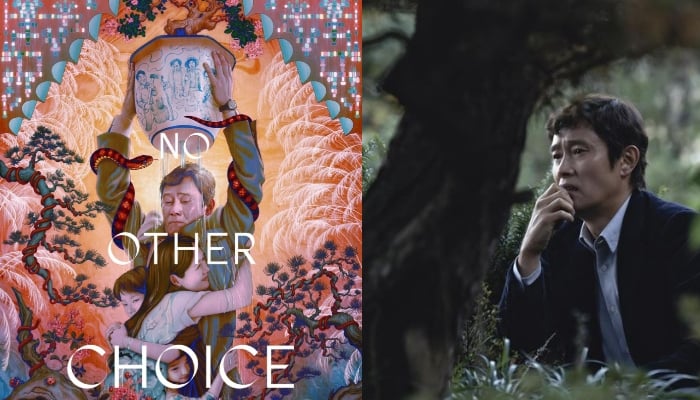
In a world where the search for employment has become a Kafkaesque ordeal, Park Chan-wook’s latest cinematic venture, No Other Choice, plunges into the absurdity and brutality of the contemporary workplace with equal parts dark comedy, formal audacity, and emotional acuity. A film about ambition, professional obsolescence, and the lengths to which a man might go to secure his livelihood, No Other Choice is simultaneously a masterclass in visual storytelling and a razor-sharp critique of modern masculinity.
Adapted from Donald E. Westlake’s 1997 novel The Ax, the film had previously been rendered by Greek-French director Costa-Gavras in 2005. Park Chan-wook, best known for Oldboy and The Handmaiden, reimagines the story with his signature combination of visual bravura, psychological insight, and twisted humor, transforming a tale of desperation into a cinematic feast of invention and perversity.
Plot Overview: Death and Job Interviews
The film centers on Man-su (Lee Byung-hun), a long-serving employee of the Solar Paper Company who finds himself rendered obsolete after twenty-five years of loyal labor. The redundancy comes not with severance or consolation but with a silent, existential slap: Man-su’s skillset, once prized, is now trivial, leaving him to navigate a job market that seems simultaneously absurd and hostile.
Unable to secure conventional employment, Man-su discovers that the only way to “compete” for a position is by eliminating his rivals. Park Chan-wook introduces the story with a precise calibration of absurdity and menace: stalking once-dull paper competitors transforms into a sequence of meticulously choreographed, often blackly comic murders. The film balances the grotesque and the hilarious, emphasizing the outlandishness of the premise while never allowing the stakes to feel trivial.
The murders themselves are executed with a meticulous sense of style and timing, each one a brief, inventive set-piece. From the lonely vinyl-lover to the large-car enthusiast, Man-su’s targets are not just obstacles to his employment—they are emblematic of the peculiar pressures and performative displays of masculinity within the modern corporate sphere. As the killings accumulate, the audience is invited to reflect on both the cruelty of capitalist competitiveness and the fragility of male ego when confronted with obsolescence.
A Darkly Comic Study of Masculinity
Park Chan-wook’s films have always been attentive to the psychological complexity of their protagonists, and No Other Choice is no exception. Man-su is presented initially as a man of refinement and taste, his appreciation for paper stocks and tactile media marking him as both sensitive and precise. Yet as his role as provider and professional diminishes, his moral compass frays. Alcohol, nicotine, and the thrill of clandestine violence gradually supplant the routines of domestic life.
This is, in essence, a midlife crisis amplified into murderous absurdity. As the narrative progresses, Man-su’s suit gives way to a hoodie and denim jacket, and his neatly groomed mustache vanishes, leaving him looking less like a professional patriarch and more like a stunted adolescent. His descent is both tragic and comic, a reflection of the pressures of contemporary masculinity when confronted with irrelevance.
Through Man-su, Park Chan-wook interrogates the cultural obsession with male performance, competitiveness, and career identity. Each meticulously staged murder is simultaneously an act of survival and a grotesque performance of masculinity, offering a darkly humorous lens on how men navigate power, insecurity, and societal expectation. The humor is pitch-black, often absurd, yet never undermines the psychological realism of Man-su’s transformation.
Visual Style: A Feast for the Eyes
As ever, Park’s mastery of visual storytelling is on full display. Cinematographer Kim Woo-hyung crafts a visual language that is both inventive and expressive. Audiences are treated to moments of formal daring: a shot from the bottom of a drinking glass, a POV sequence from inside a corpse’s eye, lyrical fades, and split screens that simultaneously advance plot and deepen psychological engagement.
One standout sequence involves a home invasion, a maxed-out sound system, and the comical use of oven gloves. The scene is simultaneously tense and hilarious, reminiscent of Park’s famous corridor-fight sequence in Oldboy, yet distinguished by its creativity and humor. The camera work never feels gratuitous; it serves to immerse the audience in Man-su’s obsessive focus while amplifying the absurdity of his actions.
The color palette and framing further reinforce the themes of alienation, obsession, and decay. Interiors are meticulously composed, often suffused with muted tones that underscore the monotony and artificiality of corporate life. In contrast, exterior sequences—rare as they are—explode in vivid, hyper-real colors that heighten the absurdity of Man-su’s increasingly audacious deeds.
Performances: Lee Byung-hun at the Height of His Craft
Lee Byung-hun delivers a career-defining performance as Man-su, balancing menace, charm, and absurdity with uncanny precision. He captures the psychological dissonance of a man torn between societal expectation and personal survival, making the audience simultaneously sympathize with and recoil from his actions. The humor arises naturally from Lee’s precise timing and expressive subtlety; even the most gruesome sequences retain a comic undertone, reflecting Park’s meticulous directorial vision.
Son Ye-jin, as Man-su’s wife Miri, provides the emotional counterpoint to his unraveling. While her screen time is limited, Ye-jin imbues her role with warmth, intelligence, and quiet observation. The tension between domestic normalcy and Man-su’s escalating violence is heightened by her grounded performance, emphasizing the stakes of his moral descent.
Supporting actors contribute to a rich, textured world of obsession, rivalry, and social absurdity. Each target of Man-su’s meticulous eliminations is distinct, embodying exaggerated traits of contemporary corporate culture: the obsessive collector, the flamboyant show-off, the complacent professional. Park Chan-wook’s attention to these details allows the film to operate on multiple levels: as a black comedy, a social critique, and a visually inventive thriller.
Themes: Work, Obsolescence, and Human Desire
At its core, No Other Choice is a critique of the modern employment machine. It examines the psychological toll of redundancy, the absurd competitiveness of hiring processes, and the lengths to which individuals are willing to go to survive professionally. The film’s homage to tactile paper and the sensory pleasures of print media contrasts with the cold, dehumanizing aspects of corporate bureaucracy, highlighting the tension between human creativity and institutional grind.
Park Chan-wook is particularly adept at blending social commentary with personal narrative. Man-su’s journey is emblematic of broader societal anxieties: the devaluation of skill, the commodification of human effort, and the performance of identity within a rigidly hierarchical world. The film’s absurdist violence serves as both spectacle and metaphor, exaggerating the stakes of a system that treats human life as disposable in the pursuit of efficiency and profit.
The narrative also interrogates the performative nature of masculinity. Man-su’s professional identity is closely tied to his sense of self-worth; when that identity is threatened, morality becomes negotiable. The killings are simultaneously acts of survival and grotesque attempts to reassert male dominance, offering a critique of societal pressures that equate success with control, competition, and aggression.
Humor and Pulp Sensibility
Despite its grim subject matter, No Other Choice is consistently funny, often in ways that are absurdly surreal. Park Chan-wook relishes the incongruities of the premise, juxtaposing mundane workplace concerns with outlandish violence. The result is a film that is, in every sense, ink-black comedy—a pulp narrative that interrogates the human condition while entertaining with ingenuity and style.
This comedic sensibility is reinforced through the inventive staging of murders, the meticulous attention to props (from papers to sound systems), and the absurd escalation of Man-su’s behavior. The audience is invited to laugh even as they recoil, a delicate tonal balance that Park maintains with considerable skill.
Technical Mastery: Camera, Editing, and Mise-en-Scène
From a technical perspective, No Other Choice is exemplary. Kim Woo-hyung’s cinematography is probing and dynamic, using unusual angles, creative framing, and kinetic movements to immerse the audience in Man-su’s obsessive mind. Editing by [Editor’s Name] is precise, ensuring that pacing remains taut even during sequences heavy with exposition or formal experimentation.
The mise-en-scène is meticulous, with every detail—from office furniture to paper textures—serving narrative and thematic purposes. Park’s signature visual flair is evident in the interplay between spatial composition and psychological focus, demonstrating why he remains one of modern cinema’s most innovative visual storytellers.
Comparison to Park Chan-wook’s Oeuvre
No Other Choice sits comfortably within Park Chan-wook’s body of work, synthesizing the stylistic daring of Oldboy, the narrative complexity of The Handmaiden, and the dark humor of Thirst. It demonstrates his mastery of tone, balancing horror, comedy, and social critique with precision.
The corridor-fight sequence of Oldboy finds a spiritual successor in Man-su’s inventive home invasion scenes. Similarly, the attention to sensory detail—the tactile pleasures of paper, the intricacies of domestic spaces—recalls The Handmaiden’s meticulous world-building. Yet No Other Choice distinguishes itself through its sustained satirical focus on contemporary employment culture, making it arguably Park’s most socially incisive work to date.
Conclusion: A Masterpiece of Black Comedy and Social Critique
No Other Choice is a bold, ambitious, and consistently inventive film. It marries Park Chan-wook’s visual virtuosity with razor-sharp social critique, producing a work that is simultaneously entertaining, thought-provoking, and morally complex. Lee Byung-hun delivers a career-defining performance, while Rebecca Ferguson’s AI judge (in another cinematic universe, perhaps) and Son Ye-jin’s grounded presence anchor the narrative in human stakes.
The film’s absurdist violence, inventive cinematography, and piercing humor create a cinematic experience that is as intellectually engaging as it is viscerally thrilling. Park Chan-wook has crafted what he himself has called a “masterpiece,” and while audiences may recoil at its dark subject matter, there is no denying the artistry and audacity at work.
In the end, No Other Choice is a film about survival—professional, personal, and moral—and the extreme lengths to which a man will go when confronted with obsolescence. It is pulp fiction elevated by genius, a satirical mirror held up to the modern workplace, and a testament to Park Chan-wook’s unrivaled skill as a filmmaker. Cut it, print it, and marvel at the intricate, deadly ballet he choreographs between ambition, desperation, and human folly.