
MLWBD Top Rated Movies: A Definitive Look at Cinema’s Most Enduring Classics
By [Your Name]
In every era of filmmaking, a handful of movies transcend time, genre, and geography to become touchstones of human storytelling. They’re the films that define generations, ignite cultural conversations, and set the bar for artistic excellence. On MLWBD’s top-rated movies list, these titles stand not merely as favorites, but as milestones—cinematic achievements that reflect the very soul of the medium.
From Hollywood’s Golden Age to groundbreaking world cinema, from Japanese samurai epics to South Korean thrillers, from animated masterpieces to iconic dramas, this list is a curated portrait of what greatness looks like on screen. It is a celebration of visionaries, performers, and storytellers whose work has shaped film history.
Below, we take a deep, immersive look at the top-rated films that continue to dominate critical rankings and global audiences alike.
The Shawshank Redemption (1994)
Directed by Frank Darabont
There are films that entertain, and then there are films that uplift. The Shawshank Redemption falls firmly into the latter category. Despite its modest reception at release, it has become one of the most universally beloved movies ever made—often topping audience polls as the greatest film of all time.
Tim Robbins’ Andy Dufresne, wrongfully imprisoned yet never broken, stands as a symbol of resilience in the face of cruelty. Morgan Freeman’s Red, with his soulful narration, provides the beating heart of the story.
Its mastery lies in the quiet moments: a carved chess piece, a rooftop beer, the playing of Mozart over a prison yard. Shawshank reminds us that hope—no matter how fragile—is often the only tool we need to survive. When Andy emerges from the sewage pipe and raises his arms to the sky, cinema itself seems to breathe.
The Godfather (1972)
Directed by Francis Ford Coppola
Few films have shaped the cultural imagination the way The Godfather has. A sweeping portrait of power, loyalty, and corruption, Coppola’s masterpiece is both a chilling gangster saga and an intimate family drama.
Marlon Brando’s Don Vito Corleone is regal, ruthless, and strangely compassionate, while Al Pacino’s Michael undergoes one of cinema’s most iconic character transformations—from reluctant son to ruthless mafia boss.
Beyond its quotable dialogue and legendary scenes—the horse head, the wedding, the baptism montage—the film reflects on the illusion of control and the cost of ambition. Watching Michael close the door on Kay serves as a haunting metaphor for the price of power: isolation.
Selena Gomez: My Mind & Me (2022)
Directed by Alek Keshishian
In an era where celebrity narratives are tightly curated, My Mind & Me stands out for its raw vulnerability. Selena Gomez opens her life—and her struggles—to create a documentary that is as emotionally devastating as it is empowering.
Rather than glorifying fame, the film exposes its toll: chronic illness, scrutiny, mental health battles, and the relentless pressure to be perfect in public. Gomez’s willingness to dismantle her own image is both courageous and rare, bringing forth a cinematic experience that resonates deeply with viewers navigating similar struggles.
As a top-rated MLWBD entry, it reflects a shift in modern storytelling—toward honesty, compassion, and healing.
The Godfather Part II (1974)
Directed by Francis Ford Coppola
If The Godfather is about the fall of a family, Part II is about the haunting legacy of that fall. Widely regarded as one of the greatest sequels ever made, the film expands on its predecessor with a dual narrative structure: the rise of young Vito Corleone (Robert De Niro) and the continued descent of Michael.
De Niro’s performance, delivered largely in Sicilian, is mesmerizing—subtle, calculated, and filled with unspoken longing. Al Pacino, meanwhile, delivers a colder, more haunted Michael, a man losing his family in his quest to protect it.
The film’s quiet moments—the Senate hearing, the confrontation with Fredo, the final shot of Michael alone—linger long after the credits roll. It is tragedy at its most operatic.
Schindler’s List (1993)
Directed by Steven Spielberg
A film that changed the way the world remembered history, Schindler’s List is Spielberg’s most personal and devastating work. Filmed in stark black and white, it captures the horrors of the Holocaust with unflinching honesty.
Liam Neeson’s Oskar Schindler is complex—a flawed businessman who transforms into a reluctant hero. Ben Kingsley’s Stern and Ralph Fiennes’ chilling portrayal of Amon Goeth add depth and terror to the narrative.
The red coat of a little girl becomes a symbol of innocence lost. The final scene, where survivors place stones on Schindler’s grave, bridges past and present, reminding us that cinema can preserve memory.
12 Angry Men (1957)
Directed by Sidney Lumet
Set entirely in a jury room, 12 Angry Men is a masterclass in tension, dialogue, and moral responsibility. Henry Fonda’s Juror #8 stands as the lone voice of reason, challenging the biases and prejudices of his fellow jurors.
The film’s brilliance lies in its simplicity. With no spectacle and no action, it builds a gripping drama purely from human interaction. At its core, it is a lesson in empathy—a reminder that justice requires listening, understanding, and bravery.
Spirited Away (2001)
Directed by Hayao Miyazaki
Miyazaki’s animated masterpiece is not just a film—it is an immersive dream, weaving Japanese folklore with universal themes of courage, identity, and innocence.
Chihiro’s journey through the spirit world is filled with unforgettable imagery: the faceless No-Face, the bathhouse, the dragon Haku. Yet beneath the fantasy lies a deeply human story about finding strength in vulnerability.
Few animated films achieve such emotional depth. Spirited Away invites viewers to rediscover wonder, reminding us that magic lives in courage and compassion.
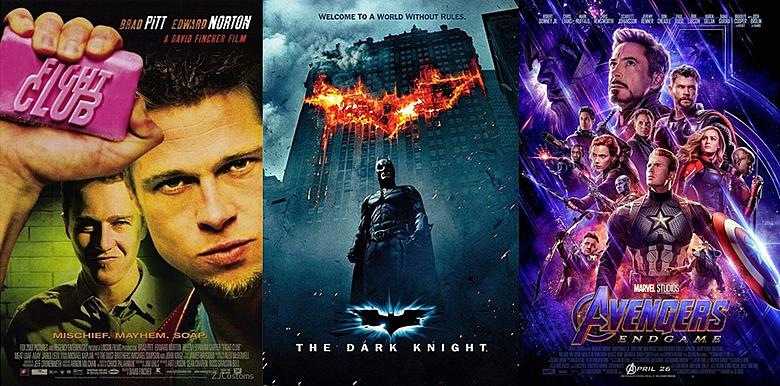
The Dark Knight (2008)
Directed by Christopher Nolan
More than a superhero film, The Dark Knight is a moral epic exploring chaos, justice, and the fragile line between heroism and obsession.
Heath Ledger’s Joker, an agent of chaos, delivers one of the most chilling and transformative performances in cinematic history. Christian Bale’s Batman faces not just a villain, but the limits of his own ideals.
Nolan’s direction, Hans Zimmer’s score, and the film’s philosophical complexity elevate it into the realm of timeless cinema.
Dilwale Dulhania Le Jayenge (1995)
Directed by Aditya Chopra
Few films have shaped Indian pop culture like DDLJ. Shah Rukh Khan and Kajol’s chemistry creates a romance that has charmed generations.
Set across Europe and India, the film blends tradition with modernity, offering a story about love, family, and responsibility. Its songs, dialogues, and characters have become embedded in Bollywood’s DNA.
Simran and Raj’s love story remains a celebration of youthful rebellion softened by respect, making DDLJ one of cinema’s most enduring romances.
The Green Mile (1999)
Directed by Frank Darabont
Another Darabont masterpiece, The Green Mile blends fantasy and drama in a heart-wrenching tale of empathy and injustice.
Tom Hanks’ Paul Edgecomb and Michael Clarke Duncan’s John Coffey form a bond that transcends the walls of a death row prison. Coffey’s supernatural gifts underscore the film’s moral message: goodness often exists where society least expects it.
The film is a meditation on compassion, cruelty, and the cost of human suffering.
Parasite (2019)
Directed by Bong Joon-ho
A global phenomenon, Parasite is an incisive critique of inequality disguised as a gripping thriller. Its genre-bending style—dark comedy, drama, horror—keeps viewers constantly on edge.
The Kim family’s infiltration of the wealthy Park household unravels with precise, escalating tension. The basement revelation remains one of cinema’s most shocking twists.
Winning the Oscar for Best Picture, Parasite redefined global cinema’s reach and proved that powerful stories transcend language.
The Lord of the Rings: The Return of the King (2003)
Directed by Peter Jackson
The epic conclusion to Tolkien’s saga, Return of the King stands as one of the most ambitious achievements in film history.
From the Battle of Pelennor Fields to Frodo’s final steps on Mount Doom, the film delivers spectacle interwoven with emotional depth. Its themes—friendship, sacrifice, courage—resonate long after the final curtain.
It remains a towering achievement in fantasy filmmaking.
Pulp Fiction (1994)
Directed by Quentin Tarantino
With nonlinear storytelling, razor-sharp dialogue, and unforgettable characters, Pulp Fiction revolutionized modern cinema.
Tarantino weaves multiple storylines—with John Travolta, Uma Thurman, and Samuel L. Jackson at the center—into a chaotic, stylish tapestry of crime and dark humor.
The film’s cool, pulsing energy and genre-defying structure cemented its status as a cult classic.
Your Name (2016)
Directed by Makoto Shinkai
A breathtaking blend of romance, fantasy, and time-travel, Your Name reignited global admiration for anime storytelling.
Taki and Mitsuha’s body-swapping journey unfolds into an emotional epic about fate, memory, and connection. The comet scene, paired with RADWIMPS’ music, delivers one of animation’s most unforgettable emotional climaxes.
The Good, the Bad and the Ugly (1974)
Directed by Sergio Leone
The definitive spaghetti Western, Leone’s masterpiece is gritty, stylish, and grand in scale. Clint Eastwood’s “Man with No Name,” Lee Van Cleef’s villainy, and Eli Wallach’s chaotic charm form an unforgettable trio.
Its operatic score and sweeping landscapes shaped the identity of Western cinema for generations.
Interstellar (2014)
Directed by Christopher Nolan
A cosmic odyssey that is ultimately about love, Interstellar blends science, emotion, and spectacle. Matthew McConaughey’s Cooper travels across galaxies in search of humanity’s survival—but the film’s true power lies in his relationship with his daughter Murph.
Hans Zimmer’s soaring score and Nolan’s audacious vision cement its status as a modern sci-fi classic.
Forrest Gump (1994)
Directed by Robert Zemeckis
A simple man unwittingly witnesses—and shapes—major historical events. Tom Hanks’ iconic role turns Forrest into a symbol of innocence, kindness, and hope.
The film’s blend of nostalgia, romance, and humor makes it endlessly rewatchable.
Squid Game: Making Season 2 (2025)
A documentary-style deep dive into the global Korean phenomenon, offering unprecedented access to production, cast, and creative decisions. It stands as a testament to how modern streaming projects have reshaped cinematic culture.
GoodFellas (1990)
Directed by Martin Scorsese
A high-octane, brutal, and stylish chronicle of mob life, GoodFellas captures the allure and horror of crime with sharp energy and unforgettable performances. Scorsese’s direction and Joe Pesci’s terrifying turn define the film’s legacy.
Seven Samurai (1954)
Directed by Akira Kurosawa
A monumental epic and one of cinema’s most influential films. Kurosawa’s storytelling, character depth, and revolutionary action sequences laid the groundwork for countless future blockbusters, from Westerns to modern action films.
CONCLUSION: A TAPESTRY OF CINEMATIC EXCELLENCE
From prison dramas to samurai epics, from psychological thrillers to heartwarming romances, the MLWBD top-rated movies list represents the pinnacle of storytelling. These films endure because they reflect humanity—our fears, dreams, struggles, and triumphs.
They are more than movies.
They are experiences.
They are memories.
They are history.