
STRANGER THINGS’ Series Finale Review: Wasn’t Perfect, But It Was a Satisfying Goodbye
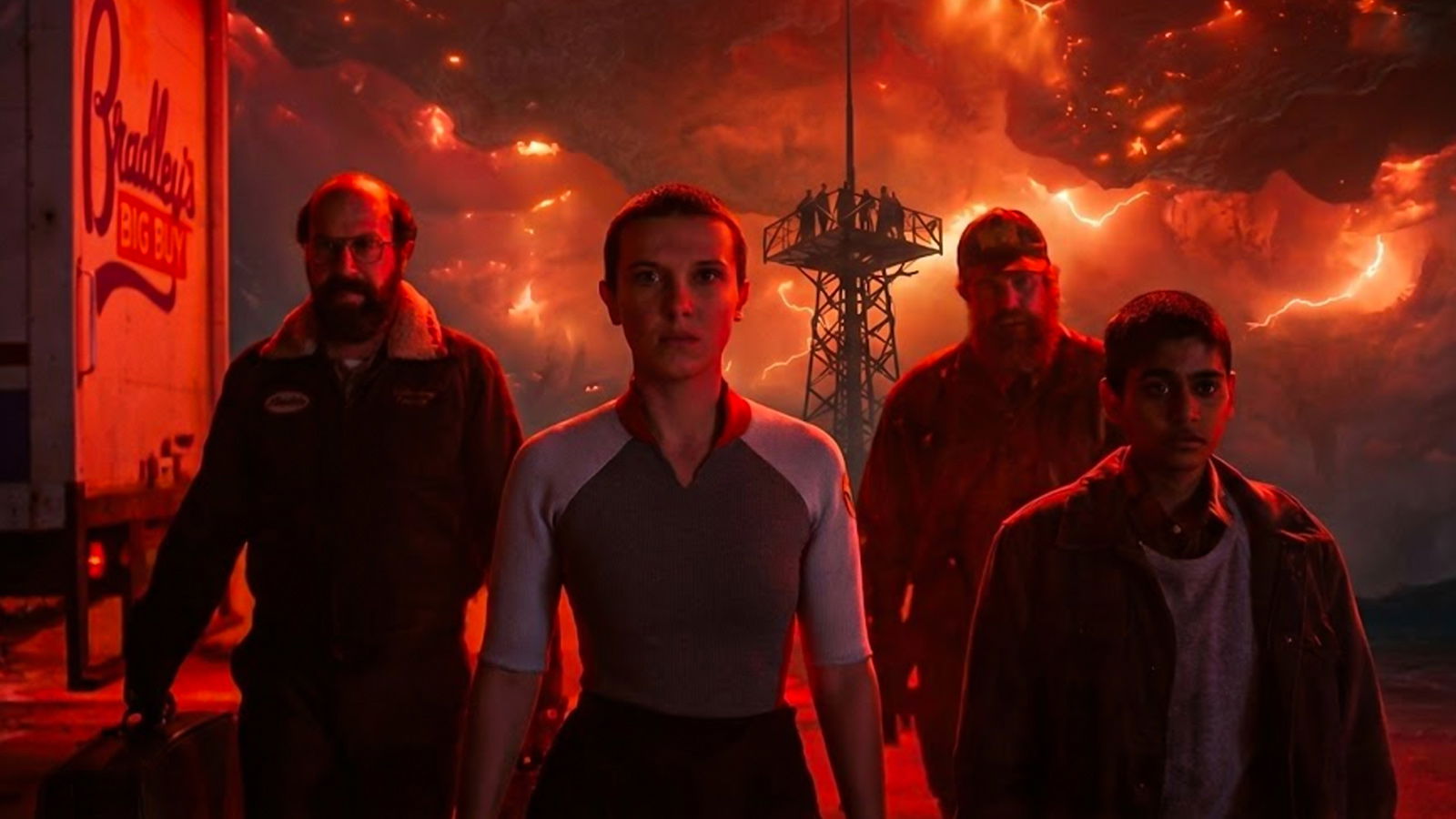
After nearly a decade of Demogorgons, synths, bikes, and bonds forged in trauma and friendship, Stranger Things has finally come to an end. With its series finale, “The Rightside Up,” the Duffer Brothers closed the door on one of Netflix’s most influential and beloved shows. Expectations could not have been higher. This wasn’t just the end of a season—it was the end of an era.
So what do you most want from a series finale of a show like Stranger Things? A clean conclusion to the plot? Big surprises? Meaningful deaths? Jaw-dropping spectacle? Emotional character payoffs years in the making? Or simply a happy ending?
The truth is, Stranger Things tried to deliver all of it—and mostly succeeded. The finale wasn’t perfect. It stumbled in pacing, made a few baffling narrative decisions, and occasionally played things far too safe. But it also delivered heart, closure, and spectacle in a way that felt true to the show’s core identity. In the end, Stranger Things may not have achieved true greatness with its finale, but it absolutely earned its goodbye.
The Weight of Expectations
Few shows in modern television history have carried the cultural weight of Stranger Things. What began in 2016 as a nostalgic sci-fi mystery quickly evolved into a global phenomenon. Over five seasons, audiences grew up alongside these characters. The kids weren’t just fictional heroes—they were emotional constants in viewers’ lives.
That kind of investment creates immense pressure. A bad finale doesn’t just disappoint; it can retroactively sour an entire series. The Duffers were clearly aware of this, and “The Rightside Up” often feels like a deliberate attempt to honor what came before rather than shock for the sake of shock.
That choice is both the finale’s greatest strength and its most noticeable limitation.
Plot Resolution: Straightforward to a Fault
From a structural standpoint, the series finale is remarkably straightforward. Despite being a sci-fi story full of alternate dimensions, psychic powers, and cosmic horror, Stranger Things opts for clarity over subversion.
The Upside Down threat is confronted head-on. Vecna and the Mind Flayer are defeated. Hawkins is saved. The world doesn’t end.
For some viewers, that simplicity will feel comforting. For others, it may feel like a missed opportunity. There are very few genuine surprises in how the story plays out. Even the episode’s so-called “big reveal”—the deeper truth about Henry Creel and his connection to the Mind Flayer—had already been established as canon elsewhere.
This is where one of the most baffling creative decisions of the entire franchise comes into focus: the choice to reveal crucial villain backstory in a stage play that many viewers never saw. Important lore should never be hidden behind supplementary material, especially when it robs the main narrative of impact.
By the time the finale revisits Henry’s origins, the moment lands with a thud rather than a gasp. The emotional weight simply isn’t there anymore.
Vecna, Henry Creel, and a Villain in Limbo
The show also struggles to fully commit to what Vecna is meant to represent.
On one hand, the series flirts with the idea of making Henry Creel a tragic figure—a child preyed upon by an ancient, malevolent force. On the other, it stops short of offering true sympathy. Henry ultimately chose to join the Mind Flayer. He wasn’t just a pawn.
This middle-ground approach leaves Vecna feeling less terrifying than he did in season four, where he was a pure embodiment of psychological horror. His obsession with time—once a fascinating character detail—receives little payoff, and one of the biggest unanswered questions remains: what kind of world was he actually trying to create?
These unresolved ideas don’t ruin the finale, but they do prevent Vecna from reaching his full potential as one of television’s great villains.
The Military Subplot: A Misplaced Focus
If there is one element of the finale that feels actively frustrating, it’s the time spent on the military storyline. Long considered the least compelling subplot in the series, its prominence in the finale feels disproportionate.
Yes, it ultimately pays off with Eleven’s sacrifice, and yes, it provides narrative justification for the final confrontation. But much of this could have been achieved without devoting so much screen time to characters and conflicts that viewers never truly cared about.
In a finale that runs over two hours, every minute matters. Time spent here is time not spent on deeper emotional exploration—or, frankly, more Vecna.
The Epilogue Problem: Too Much of a Good Thing
“I love a good series finale epilogue.”
That sentiment captures one of the finale’s central contradictions. Individually, the epilogue scenes set 18 months later are beautiful. They provide warmth, reassurance, and a sense that life goes on. Each moment, in isolation, feels earned.
The problem is volume.
Instead of one or two focused epilogues, the finale offers four or five. What should feel cathartic starts to feel repetitive. The emotional beats blur together, and the momentum of the ending slows to a crawl.
This doesn’t make the epilogue bad—it makes it indulgent. Restraint might have elevated these moments from good to unforgettable.
Where the Finale Truly Shines: Character Payoffs
Despite its flaws, the finale excels where Stranger Things has always been strongest: its characters.
Nearly every major character receives a moment that feels authentic to their journey. This isn’t a finale that forgets its roots in favor of spectacle. It remembers that this story was always about people first, monsters second.
Hopper and Eleven: The Emotional Core
Every scene between Hopper and Eleven is an absolute highlight. Their relationship—built on loss, protection, and unconditional love—has been the emotional backbone of the series since season one.
The finale honors that bond beautifully. Their interactions feel earned, intimate, and deeply human. Hopper’s growth from a broken man into a stable father figure reaches its natural conclusion, while Eleven’s arc comes full circle in a way that feels both heroic and tragic.
Mike’s Redemption
After three seasons of narrative sidelining, Stranger Things finally remembers why Mike Wheeler mattered.
Finn Wolfhard carries the final emotional stretch of the episode with quiet confidence. His speech, his resolve, and his love for Eleven remind viewers of the heart and empathy that defined the show’s early years. It’s a powerful reminder of what was missing—and why its return matters so much.
The Party as a Whole
One of the finale’s most satisfying achievements is how it handles the Party. No single character saves the day alone. It takes everyone.
This is not just fan service—it’s thematic payoff. Stranger Things has always been about friendship as a force powerful enough to challenge horror itself. The finale doesn’t just acknowledge that idea; it builds its climax around it.
Jamie Campbell Bower’s Award-Worthy Performance
If there is one element of the finale that feels unquestionably great, it’s Jamie Campbell Bower’s performance as Vecna.
Already excellent in season four, Bower somehow surpasses himself here. His portrayal of Henry Creel is layered, unsettling, and emotionally complex. He makes you feel sympathy for Henry even as you desperately want the Party to stop him.
That duality is incredibly difficult to achieve, and Bower nails it. His scenes are electric, and it’s impossible not to wonder what might have been if the script had given him even more to work with.
Spectacle Done Right
Visually, the series finale delivers where it matters most.
While some sequences earlier in the season looked noticeably stage-bound or reliant on uneven green-screen work, the final confrontation with the Mind Flayer/Vecna is anything but cheap. The monster design, scale, and choreography are genuinely impressive.
Is the Mind Flayer the most interesting villain conceptually? Perhaps not. But as a visual and action-driven payoff, the finale’s climactic sequence is thrilling from start to finish. It feels big, dangerous, and worthy of a show that defined Netflix’s blockbuster era.
Death, Sacrifice, and Closure
Was it too easy to kill Vecna, the Mind Flayer, and effectively end the Upside Down in one episode? Maybe.
But ease doesn’t always equal emptiness. The finale understands that emotional truth matters more than mechanical difficulty. Eleven’s sacrifice—whether interpreted literally or symbolically—lands with weight.
Mike’s final story doesn’t feel like a mystery so much as a promise: Eleven is at peace. Jane has finally found rest after years of pain and responsibility. She gave the world safety, and in return, she was allowed to let go.
That sense of closure is invaluable.
A Goodbye That Understands Its Audience
The most important thing Stranger Things does in its finale is respect its audience’s emotional investment.
It doesn’t shock for attention. It doesn’t tear everything down. It says goodbye with sincerity.
The show delivers the emotions it has always excelled at—fear, love, humor, grief, and hope—while still offering the spectacle expected of a sci-fi epic. It may not be daring in its storytelling, but it is deeply considerate.
Final Verdict: Not Perfect, But Meaningful
So, was Stranger Things’ series finale perfect? No.
It stumbled with pacing. It made questionable lore decisions. It played things safe when it could have been bolder.
But did it work?
Yes.
Because it paid off its character arcs. Because it honored friendship as its central theme. Because it delivered emotion, spectacle, and closure in equal measure.
In the end, Stranger Things reminds us that a farewell doesn’t have to be flawless to be satisfying. It just has to feel honest.
And “The Rightside Up,” for all its imperfections, feels like a goodbye made with care.
Sometimes, that’s enough.