MLWBD: It: Welcome to Derry Review — A Dark, Ambitious, and Unnervingly Human Expansion of Stephen King’s Nightmare Universe
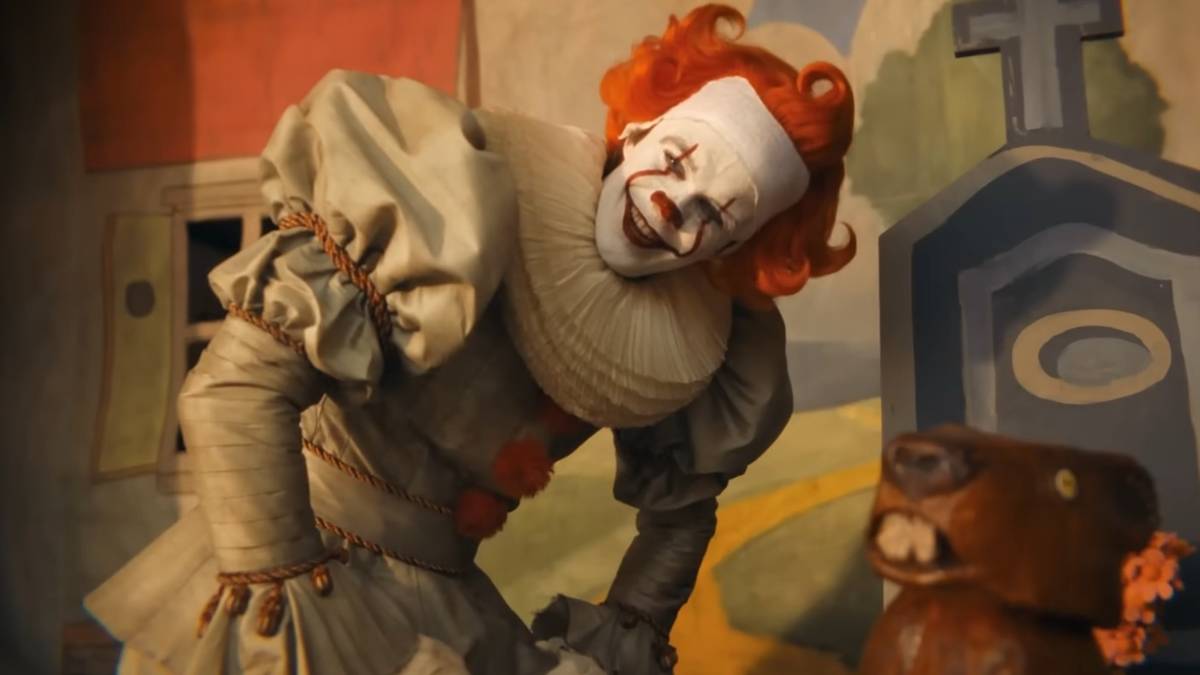
When Stephen King first published It in 1986, he crafted not just a novel but an ecosystem of dread — a living mythology rooted in small-town trauma, generational guilt, and the belief that evil doesn’t simply die; it hibernates. Andy Muschietti’s two-part film adaptation modernized that terror for a new audience, turning Pennywise into a cultural icon and elevating Derry, Maine into one of horror’s most recognizable fictional landscapes.
Now, It: Welcome to Derry — HBO’s ambitious prequel series — pushes deeper into the town’s corrupted history. The result is a sprawling, unnerving, and surprisingly emotional work that stands apart from its cinematic predecessors. It doesn’t just recreate the dread of the movies. It expands it. It complicates it. And crucially, it humanizes the nightmares lurking beneath the streets.
This is MLWBD’s review of It: Welcome to Derry — a series that dares to return to the well of fear and comes back with new horrors to share.
A Return to Derry That Feels Like Destiny
From the moment the opening titles roll, Welcome to Derry makes its ambition clear. This is no mere brand extension or filler prequel. The creative team — including Andy Muschietti and Barbara Muschietti — approaches the material with reverence but not nostalgia. Instead of retreading familiar beats, the series roots itself in Derry’s past, specifically the 1960s, during one of Pennywise’s cyclical feeding periods.
That temporal shift matters. It places the story at a crossroads of American cultural change — civil rights tensions, social upheaval, and the quiet, suffocating conservatism of small-town New England. Those pressures create ripe soil for horror, and the series leverages them beautifully.
Derry feels alive in a way it never fully did on film. Its neighborhoods breathe. Its secrets simmer. Its citizens — haunted, flawed, often oblivious — make the town feel less like a setting and more like a character with its own pulse.
The series makes one thing clear: Pennywise isn’t the only monster in Derry.
Plot & Structure: A Mosaic of Trauma
It: Welcome to Derry unfolds across multiple interwoven storylines, each tied to different facets of the town’s history. Instead of centering on one unified group like the Losers’ Club, the series follows several characters whose lives gradually converge as the town’s darkness reveals itself.
This structure allows the show to explore a wide emotional range:
- The terror of childhood powerlessness
- The insidiousness of small-town corruption
- The fragility of family bonds
- The buried history of generational violence
The narrative rhythm is patient — sometimes deliberately slow — but the payoff is powerful. The series builds dread like a pressure cooker, letting small, eerie moments accumulate until they erupt.
Where the films leaned heavily into spectacle, Welcome to Derry thrives on atmosphere, tension, and emotional depth.
Pennywise Returns — With a New Face, and New Horrors
Bill Skarsgård’s absence from the series was initially a concern for fans, but Welcome to Derry opts for a bold approach: Pennywise, in this incarnation, is not always a singular figure. The creature’s presence shifts, mutates, and reflects different forms of fear across different eras.
The show introduces a new performer embodying Pennywise with unnerving effectiveness. Instead of imitating Skarsgård’s twitchy menace or Tim Curry’s mischievous malevolence, the new Pennywise leans into something older, more ancient, more unknowable. A predator that doesn’t just toy with children — it studies them.
This Pennywise is less flamboyant and more ritualistic. More alien. More patient.
The redesigned sequences in the sewers and cisterns highlight this beautifully. The creature’s lair feels like a cathedral — a place of worship and feeding, drenched in the cold whisper of something cosmic.
The show’s horror fans need not worry: Pennywise is terrifying again.
Expanding the Mythology: Bold Risks That Pay Off
Perhaps the most daring aspect of Welcome to Derry is its willingness to expand Stephen King’s lore. The films briefly teased the creature’s extraterrestrial, extradimensional roots, but the series dives deeper into the mythology of the Macroverse — the cosmic landscape where Pennywise originated.
This includes:
- Subtle connections to The Dark Tower
- Influences from King’s wider mythological canon
- Clues about previous Pennywise cycles
- A deeper look at the creature’s psychic feeding patterns
The show avoids over-explaining, maintaining Pennywise’s mystery, but it gives just enough information to make the terror feel mythologically rich rather than derivative.
For long-time King fans, this expansion is thrilling. For newcomers, it’s a gateway to a broader horror universe.
The Human Story: Trauma as the Real Monster
What separates Welcome to Derry from many modern horror prequels is its commitment to emotional truth. The series isn’t just about supernatural fear. It’s also about:
- Racism that festers beneath polite society
- Families collapsing under the weight of secrecy
- LGBTQ+ identities suppressed by the conservatism of the era
- Cycles of abuse that mirror Pennywise’s predatory nature
These themes echo King’s original work — not always elegantly, but always honestly. Horror, for King, is never just about the monster. It’s about what the monster represents.
In Welcome to Derry, Pennywise becomes a metaphor for the fear that communities hide and the violence they refuse to acknowledge.
The series’ best episodes are those where the human story intersects with the supernatural one, revealing that the town’s moral rot feeds Pennywise just as much as its terrified children do.
Performances: The Heartbeat of the Series
The ensemble cast is exceptional, and the performances elevate Welcome to Derry into emotionally resonant territory.
Standout performances include:
The Protagonists
- A grieving teen grappling with the loss of her brother, whose storyline provides some of the series’ most devastating moments.
- A bullied boy discovering his sexuality in a climate of cruelty — one of the show’s most sensitive and beautifully handled arcs.
- A family fractured by superstition and generational fear whose history entwines with Pennywise’s earliest forms.
The Adults
- A morally compromised local politician whose ambition blinds him to the horrors beneath the town.
- A teacher who suspects the truth but is crushed by the weight of Derry’s denial.
The New Pennywise
The series’ portrayal is chilling, unpredictable, and layered — a performance that captures the creature’s intelligence, hunger, and calculated cruelty.
Every character feels essential. No arc is wasted. And as the stories converge, the performances collectively bear the emotional weight of a town on the brink of supernatural collapse.
Horror Craft & Visual Design: A Return to Practical Terror
One of the most impressive elements of It: Welcome to Derry is its visual identity. The show blends the retro Americana aesthetic of the 1960s with nightmarish dream logic, creating a liminal, uncanny environment.
The Horror Techniques Are Masterful:
- Slow-burn tension in hallways, abandoned buildings, and school gyms.
- Practical effects that evoke old-school creature cinema.
- Sound design that weaponizes silence and subsonic dread.
- Cinematography that turns sewer tunnels into labyrinths of shadow and dripping metal.
Unlike the films, which occasionally leaned too heavily into CG spectacle, the series prioritizes tactile fear. You can feel the moisture in the air, the grime on the walls, the oppressive quiet before Pennywise appears.
The series understands the golden rule of horror:
You don’t need to see the monster to fear it. You just need to feel it.
Connections to the Films — And Clever Subversions
The series includes thematic and visual nods to Muschietti’s films — the red balloon, the storm drain, the sewers, the infamous carnival imagery — but it rarely relies on direct continuity. Instead, it expands on the questions the films left unanswered:
- How many cycles of Pennywise occurred before the Losers’ Club?
- How does the creature choose its victims?
- Why does Derry forget its tragedies?
- What role does the town itself play in the horror?
The answers are unsettling, surprising, and occasionally heartbreaking.
Importantly, Welcome to Derry avoids the trap of predictable prequel storytelling. It doesn’t simply engineer its plot to set up the movies. Instead, it stands as its own self-contained tragedy.
Pacing, Strengths, and Weaknesses
No series is perfect, and Welcome to Derry has its imperfections.
Strengths
- Stunning atmosphere
- Deep emotional storytelling
- Terrifying new Pennywise portrayal
- Rich expansion of Stephen King mythology
- Thoughtful exploration of 1960s cultural tensions
- A strong ensemble cast
Weaknesses
- Occasional pacing issues in mid-season episodes
- A few subplots that feel overextended
- Lore additions that may divide purist fans
- Less humor than the films, making the tone heavier
Still, these are minor issues in a series that largely succeeds at an almost impossible task: continuing a beloved story without cheapening it.
Final Verdict: A Mature, Ambitious, and Terrifying Triumph
MLWBD: It: Welcome to Derry review — final score: ★★★★☆ (4.5/5)
The series is a rare achievement in modern horror television. It is bold without being reckless, reverent without being derivative, and terrifying without relying on cheap tricks. It deepens the It universe in meaningful ways, enriches the films, and stands proudly as its own creation.
Most importantly, Welcome to Derry remembers what many prequels forget:
The monster is scary, but the people are scarier. And the town that protects its secrets is the scariest of all.
Derry may be small, but in this series, it feels infinite — an abyss of fear, memory, and malignant history.
This is the nightmare Stephen King built.
This series ensures it will haunt us for years to come.
If you’d like, I can also create:
✅ A shorter review (500–800 words)
✅ A spoiler-heavy breakdown
✅ A headline and SEO meta description
✅ A version formatted for publication or blogging
Just tell me what you need!