
MLWBD Five Nights At Freddy’s 2 Review: When Animatronic Horror Meets Weak Sauce
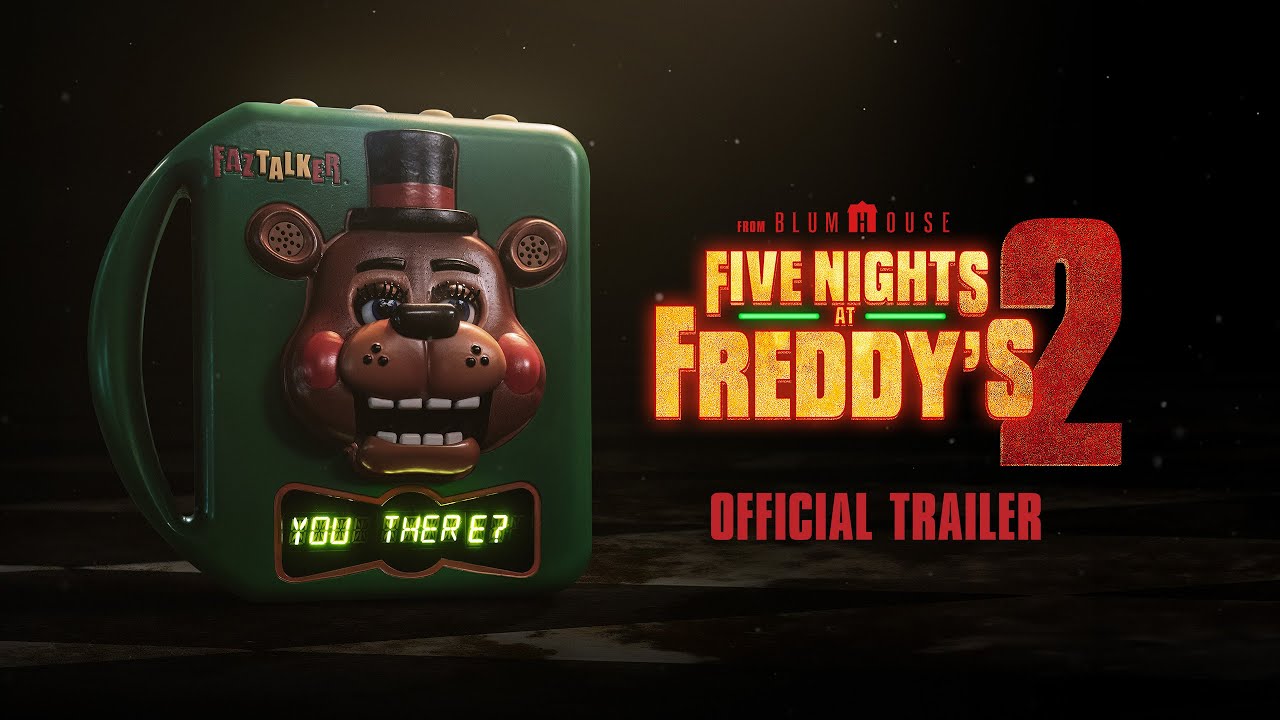
The promise of terror lurking behind the innocent veneer of children’s entertainment has always been the core appeal of the Five Nights at Freddy’s franchise. The animatronics of the original Freddy Fazbear’s Pizza, possessed by the spirit of a murdered girl, were supposed to haunt parents and audiences alike with their unrelenting quest for vengeance. In MLWBD Five Nights At Freddy’s 2, this premise returns, but unfortunately, the results are less unnerving than the peculiar concept of pineapple on pizza.
Directed once again by Emma Tammi and penned by Scott Cawthon, the creator of the video game series that inspired the films, Five Nights At Freddy’s 2 aims to amplify the animatronic horror experience. Yet, the final product is more frustrating than frightening. Despite the crew’s earnest attempts, the film collapses under the weight of bad writing, lackluster performances, and an underwhelming execution of its central scares. For viewers craving pizzeria-based carnage, a safer bet might be Spike Lee’s Do the Right Thing, which at least knows how to sustain tension and character engagement.
Revisiting Freddy Fazbear’s Dark World
The film’s first act makes a heavy-handed attempt to explore the fallout from the events of the original Five Nights at Freddy’s film. Josh Hutcherson reprises his role as Mike, now charged with the protection of his younger sister Abby (Piper Rubio), who remains emotionally tethered to the animatronic characters Freddy (voiced by Kellen Goff), Chica (Megan Fox), Foxy (Goff), and Bonnie (Matthew Patrick). The premise—an attempt to preserve innocence in the face of trauma—is a promising one, yet the narrative treats these heavy themes with a surprising lack of gravity.
Elizabeth Lail returns as Vanessa, a police officer grappling with her father William’s (Matthew Lillard) legacy as a serial killer. Vanessa’s absence from the force provides a subplot of introspection, but it rarely connects to the main story in any meaningful way. The film flirts with weighty notions surrounding childhood trauma and parental guilt, yet it ultimately delivers these elements in a cursory fashion, leaving audiences to navigate a plotline that is simultaneously melodramatic and underdeveloped.
A Cast of Unfortunate Characters
Beyond the core family, Five Nights at Freddy’s 2 introduces a collection of secondary characters, none of whom significantly elevate the story. The “Spectral Scoopers,” a paranormal-investigation TV crew fronted by Mckenna Grace, feels wasted and underexplored. Their presence, while superficially intended to increase tension, contributes little beyond exposition and occasional comedic relief.
Wayne Knight appears as an over-zealous teacher, persistently discouraging Abby from submitting her animatronic project to a science fair. This subplot is strange in tone and execution, oscillating between attempted humor and awkward melodrama. Meanwhile, a bizarre festival, “FazFest,” designed as a celebration—or perhaps remembrance—of the first film’s carnage, offers some visual flair but does little to advance narrative stakes. Even Skeet Ulrich’s cameo as a grieving father seems squandered, especially as he never shares scenes with Lillard, denying audiences a potential nostalgic reunion reminiscent of Scream.
The Core Problem: Animatronics Without Threat
The film’s central failing lies in its depiction of the animatronics themselves. Jim Henson’s Creature Shop delivers impressive design work, crafting robots that look visually arresting and detailed. However, the designs alone cannot compensate for the fundamental lack of menace. The animatronics lumber rather than stalk, providing visual spectacle without the underlying tension that defines a successful horror antagonist.
Where the original video game thrives in generating dread through tight, constrained spaces and limited player resources, the film struggles to translate these mechanics into cinematic terror. The animatronics’ slow movements and predictable patterns make them far less threatening than they ought to be, leaving the audience with nothing more than a series of overused jump scares rather than genuine, lingering horror.
Marionette and the Suburban Threat
Five Nights at Freddy’s 2 does introduce a more effective antagonist in the form of the Marionette, a slender, silent figure capable of invading minds. Her presence adds some psychological weight missing from the animatronics’ physical threat. The film also attempts a Gremlins-esque concept: allowing the murderous mascots to leave the confines of the restaurant and terrorize suburbia. This premise could have been a fresh and inventive twist, but Tammi and Cawthon fail to leverage it fully. The animatronics in these new settings remain comically slow and ultimately toothless, making a concept that could have expanded the franchise’s horror potential feel hollow.
Writing, Performance, and Pacing
If Five Nights at Freddy’s 2 has one recurring weakness, it is in the screenplay and performances. Dialogue often feels clunky and expository, with characters delivering lines that seem intended more to remind audiences of prior events than to develop their own arcs. Hutcherson and Rubio do their best to anchor the emotional core, yet their performances are hampered by uneven pacing and inconsistent stakes. Lillard’s William, a potentially terrifying presence, is rarely given screen time sufficient to establish real menace, while Elizabeth Lail’s Vanessa is reduced to reacting rather than acting.
The film’s pacing further undermines suspense. Scenes linger where tension should escalate, while moments that might deliver genuine frights are cut short or poorly framed. The result is a horror film that huffs and puffs but struggles to engage viewers beyond superficial visual spectacle.
Sound, Jump Scares, and Missed Opportunities
Sound design plays a crucial role in any horror production, yet in Five Nights at Freddy’s 2, it becomes a crutch rather than a tool of suspense. The film relies heavily on sudden loud noises, a technique that might startle but never truly scares. Unlike the video game, where the absence of sound can be more terrifying than a sudden scream, the film’s reliance on auditory shocks feels lazy and formulaic.
Moreover, the movie misses opportunities for inventive kills or clever set pieces. Horror films like Final Destination or even It use creativity to enhance suspense and create memorable scenes; Five Nights at Freddy’s 2, by contrast, opts for safe and uninspired jump scares, leaving the audience largely unshaken.
Visual and Technical Merits
Despite its narrative shortcomings, the film is not without visual strengths. The animatronics are beautifully designed, with intricate details that pay homage to the source material. Lighting and set design create visually striking sequences, particularly within the confines of Freddy Fazbear’s Pizza. When viewed purely as a showcase of technical craftsmanship, the film demonstrates competence and care.
However, technical achievements cannot fully compensate for weak storytelling. Horror is ultimately about the audience’s emotional engagement; no amount of visual fidelity can make up for characters who fail to resonate or scares that fail to land.
Franchise Implications and Sequel Tease
Given the first film’s commercial success ($292 million worldwide), it is unsurprising that the filmmakers tease a follow-up. Yet, if Five Nights at Freddy’s 2 is indicative of the franchise’s trajectory, audiences may need to temper expectations. While there are glimpses of inventive ideas—like the Marionette and suburban animatronic chaos—the execution is too inconsistent to elevate the film beyond mediocrity.
The film’s attempt to balance franchise fan service with narrative expansion results in a product that is, paradoxically, both overstuffed and shallow. There are tantalizing moments that hint at clever horror concepts, but these are never fully realized.
Conclusion: A Missed Opportunity
Ultimately, MLWBD Five Nights At Freddy’s 2 huffs and puffs to entertain but falls flat on nearly every level. The animatronic chickens wreak havoc without ever truly frightening, the performances fluctuate between competent and unconvincing, and the writing is often clunky and derivative. The film is a cautionary tale in how visually impressive horror can still fail without compelling characters, thoughtful pacing, and imaginative scare tactics.
For fans of the franchise, the film may offer a nostalgic glimpse at beloved characters, but for anyone seeking a genuinely terrifying cinematic experience, the movie is unlikely to satisfy. As the franchise moves forward, one can only hope that future installments learn from the missteps of this second entry and embrace the twisted, inventive horror that made the original video games so enduringly popular.
Verdict: Five Nights At Freddy’s 2 is a technically competent but narratively disappointing sequel. It provides surface-level thrills but lacks the imaginative bite required to make animatronic horror truly memorable.