
mlwbd best sci fi movies to watch
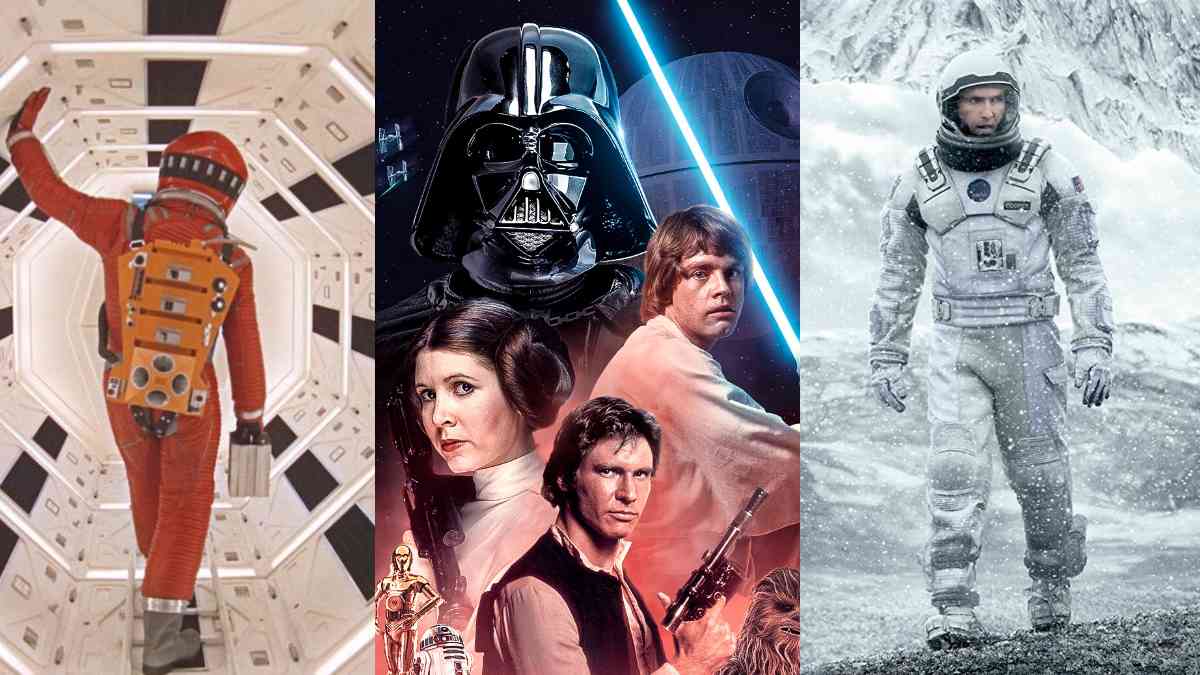
Outer space. Inner space. New worlds. Tech frontiers. Artificial intelligence. The best science‑fiction movies take us to places beyond our own imagination — dreaming up impossible futures that often shape our own technological advances. Great sci‑fi delivers mind‑bending visuals packed with mind‑blowing ideas, probing everything from the human experience to the future of humanity. It’s a genre that contains multitudes — from fast, funny, colourful space adventures to dark dystopian tragedies, set in the present, far future, or even “a long time ago in a galaxy far, far away.”
If you’re looking for some of the best sci‑fi movies of all time, you’re in the right place. Below is a curated journey through some of the most iconic, thought‑provoking, and visually stunning films ever made in the genre — from modern masterpieces to game‑changing classics. From visionary auteurs to bold indie experiments — there’s something in this list for everyone.
Why Sci‑Fi? The Power of Speculation and Vision
Science fiction films do more than entertain: they challenge, question, and expand our understanding of reality, technology, and what it means to be human. By imagining new worlds or alternative versions of our own, sci‑fi enables filmmakers and audiences to reflect on social issues, ethical dilemmas, ecological crises, identity, consciousness, and future trajectories. In the best cases, these films offer both spectacle and substance.
Whether exploring space’s vastness, delving into the human psyche, or speculating about artificial intelligence and the boundaries of science — sci‑fi reevaluates possible futures and forces us to ponder whether we want to build them.
Below are ten essential sci‑fi films — each unique in tone, style, and vision — but all exemplary in how they push the boundaries of cinema and imagination.
📽 Essential Sci‑Fi Films to Watch
Silent Running (1972)
A quietly powerful, melancholic journey — almost a proto‑eco‑sci‑fi film before environmentalism became mainstream. Directed by Douglas Trumbull, the film tells the story of the last vestiges of Earth’s plant life being kept alive aboard a greenhouse‑ship orbiting a dying planet. When orders come to destroy the flora and return the ship, one man — Freeman Lowell — rebels, aided only by robotic companions. The result is a haunting, intimate exploration of loss and hope, with lingering emotional weight.
Silent Running isn’t about grand space battles or shiny futuristic tech. It’s a meditation on grief, responsibility, and the fragile beauty of life. The film’s atmosphere — quiet yet oppressive — makes it one of sci‑fi’s most underrated gems.
District 9 (2009)
Bold, socially conscious, and electrifyingly raw — District 9 by Neill Blomkamp reimagines the “aliens among us” trope not as heroic spacefarers, but as marginalized refugees living in slums above Johannesburg. When a bureaucrat assigned to relocate them becomes exposed to alien biotechnology, his life and loyalties unravel in unexpected ways. The film blends sci‑fi action, body‑horror, and sharp socio‑political allegory about segregation, xenophobia, and humanity’s capacity for cruelty — and compassion.
Critics praised the film’s technical brilliance, emotional core, and moral complexity. One review called it “the most exciting science‑fiction movie to come along in ages.”
Donnie Darko (2001)
Indie film meets sci‑fi mind‑bend: Donnie Darko is a cult classic that weaves teenage angst, time loops, existential dread, and suburban malaise into a surreal, dreamlike narrative. When Jake Gyllenhaal’s troubled teen starts seeing visions of a sinister bunny‑suited figure predicting the end of the world, reality begins to blur, forcing both character and viewer to question time, fate, and identity. Critics hailed it as “a daring, original vision.”
Donnie Darko isn’t about alien worlds or futuristic tech; it’s about inner turmoil and temporal paradox — personal, psychological, and deeply human. For many fans, it remains one of the most emotionally resonant and intellectually provocative sci‑fi films ever made.
Sunshine (2007)
Directed by Danny Boyle, Sunshine takes us on a perilous mission to reignite our dying sun. At first glance, it appears as a classic “save humanity” space epic — but it evolves into a psychologically intense odyssey, confronting existential dread, sacrifice, and the fragility of the human mind under impossible pressure. Visually striking and atmospheric, it evokes the grandeur of space while keeping the focus sharp on the human characters and their moral dilemmas.
Reviewers praised its scope, the tension of the mission, and the film’s ability to marry spectacle with thoughtful drama.
Forbidden Planet (1956)
A cornerstone of classic sci‑fi cinema — Forbidden Planet was among the first films to depict humans traveling in faster‑than‑light starships and exploring alien planets. Its setting on a distant world orbiting another star, its depiction of robots with personality, and its early use of electronic music for atmosphere made it groundbreaking for its time.
This film laid the groundwork for everything that followed: it influenced Star Trek, Alien, and countless space‑adventure films. It’s a reminder that sci‑fi’s golden age didn’t start with big blockbusters — sometimes, its seed was planted in modest but visionary stories like Forbidden Planet.
Beyond the List: What Makes a Sci‑Fi Classic?
Why do some sci‑fi films stand the test of time — while others fade into forgetfulness? From the films above, we can observe patterns common to the greats:
- They don’t just show futuristic vistas — they use them to explore real human themes: identity, ethics, belonging, loss, hope.
- They balance spectacle with subtlety: sometimes the power lies in quiet moments, not loud explosions.
- They ask difficult questions — about humanity’s future, technology, loneliness, power, morality — leaving the viewer thinking long after the credits roll.
- They are willing to take risks — in narrative structure, mood, tone — refusing to conform to mainstream formulas.
Tips for Watching (or Revisiting) Sci‑Fi
- Be open-minded: Some of the most powerful sci‑fi films — like Silent Running or Donnie Darko — defy expectations. Let them unfold on their own terms.
- Watch with intent: Reflect on what the film is asking: about society? about humanity? about you?
- Don’t judge by production values alone: Sci‑fi isn’t only about glossy visuals; ideas, mood, and emotional resonance matter.
- Mix eras and styles: Old classics and modern films bring different strengths; together, they give a broader appreciation of the genre.
Final Thoughts: Why Sci‑Fi Still Matters
In a world that’s increasingly shaped by technology — AI, space travel discussions, climate change, societal upheavals — science fiction is more relevant than ever. It’s not just entertainment: it’s a mirror, a warning, an inspiration.
Whether you’re drawn to the nostalgia of golden‑age sci‑fi, the gritty realism of social allegories, or the mind‑bending complexity of psychological or temporal sci‑fi — there is value in every approach.
The films above are but a starting point. They mark different moments in sci‑fi’s evolution — humanistic, dystopian, hopeful, melancholic.
So dive in. Immerse yourself in alien skies, distant planets, fractured sanity, ecological warnings, and speculative futures. Let these stories challenge your assumptions, expand your imagination, and maybe — just maybe — reshape how you see our present world.
Because that’s the real power of sci‑fi: not just to show us what’s beyond, but to make us think about what lies within.