
‘Grand Ciel’ Venice Review: Labor Struggles in the Shadow of Progress
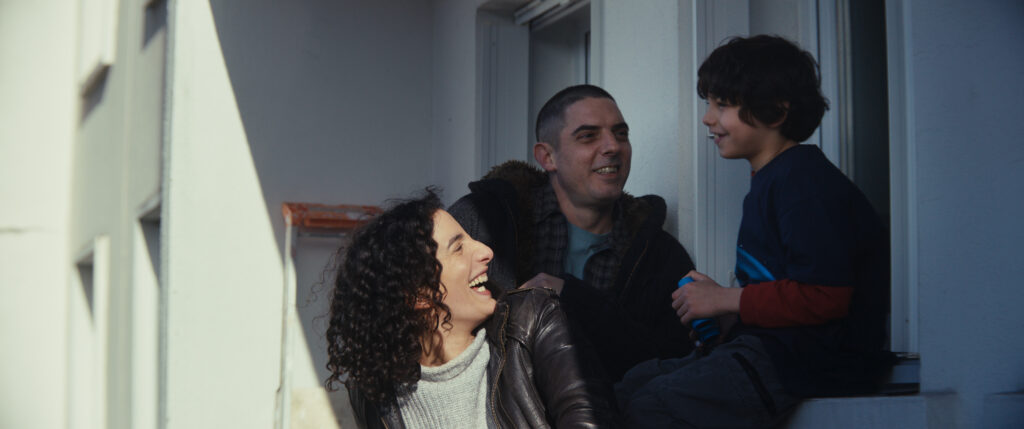
At a vast construction site destined to become one of Europe’s most luxurious mega‑developments, a worker on the night shift finds himself caught between loyalty to his fellow laborers and pressure from management. Under the dust and clamor of heavy machinery, disappearances, accidents, and strange sounds unsettle the workforce, blurring the line between social realism and haunting allegory. This is the unsettling world of Grand Ciel, the latest feature from Hata, a Japanese‑born director who has made France his artistic home and now brings an audacious new voice to contemporary French cinema.
Unveiled at the Venice International Film Festival, Grand Ciel situates itself squarely within a long French lineage of workplace dramas, while fearlessly expanding the genre’s emotional and metaphysical stakes. Through its eerie atmosphere, slow‑burning tension, and keenly observed human dynamics, the film asserts itself as a powerful meditation on class, labor, and the often invisible human cost of progress.
The French Labor Film: A Rigid Frame of Reference
French cinema has a storied history of engaging with stories rooted in the world of work. For decades, directors have returned to factories, offices, construction sites, and industrial complexes to explore not only economic injustice, but also dignity, community, and resistance.
Early anti‑establishment films channeled labor unrest directly: the strikes and sit‑ins of the post‑May ’68 era; workplace comedies masking biting political critique. Later auteurs deepened this tradition. Stéphane Brizé, for instance, has spent his career chronicling the erosion of working‑class stability in films like The Measure of a Man and At War, in scenes defined by long takes and unflinching realism. Laurent Cantet and the Dardenne brothers (Belgian but intimately linked with the French aesthetic) have dug into the rhythms and pressures of working‑class life with visceral precision, treating the workplace as both a battlefield and a crucible of selfhood.
Into this lineage comes Hata’s Grand Ciel: a work that shares the social consciousness of its predecessors but infuses it with a darker, eerier pulse. Here, labor realities are not only observed — they are, in a sense, haunted.
Plot and Characters: Dreams Built on Shifting Sand
The story centers on Vincent (played by Damien Bonnard), a construction worker who takes the night shift as a way to earn extra income for his family. Vincent’s choice comes at a cost: long hours on a half‑finished site, diminished time with his wife and young child, and an ever‑growing weariness that seeps into his bones.
At home, the family inhabits a cramped apartment, its walls closing in with each unpaid bill and postponed dream. Above them, rising out of the mud and scaffolding, is Grand Ciel, a towering luxury complex — a utopian promise of gleaming facades, landscaped parks, and serene plazas. It is scheduled to open in 2035, and while Vincent knows such heights may forever remain out of reach, the hope persists. His wife’s job as a promoter for the project grants the family a sliver of proximity to that dream, even as it underscores their exclusion from it.
On the worksite, meanwhile, reality proves harsher. Setbacks — both petty and serious — begin to accumulate. Rumors of unfair practices, unsafe conditions, and low pay ripple through the workers. Guarded bond after guarded bond begins to fray.
This is no simple tale of exploitation; it is a slow unraveling of trust, community, and identity under the pressures of a system that profits from precarity.
Vincent’s Dilemma: Between Solidarity and Survival
What elevates Grand Ciel above a standard social realist drama is Vincent’s fraught position between two worlds. Management sees him as reliable and capable — a bridge between supervisors and laborers — and entrusts him with responsibilities that bring him closer to the project’s power structure. His co‑workers, however, view his proximity to the bosses with suspicion. To them, Vincent’s loyalty is a matter of survival for all of them, but to Vincent it quickly becomes a moral labyrinth.
Should he side with the company that relies on him, hoping that such loyalty will, in some distant future, translate into security for his family? Or should he stand with his fellow workers, who are pushing for safer conditions, fair treatment, and a voice in decisions that directly affect their lives?
The contradiction is brutal in its simplicity: Vincent wants stability, but the very system that promises it does not intend to deliver. His heartbeat becomes the ticking clock of the story — a psychological narrative of divided loyalty and creeping disillusionment.
Disappearance, Fear, and the Uncanny
Something’s not right is the quiet but persistent refrain of Grand Ciel. Early in the film, the unexplained disappearance of a fellow worker — an undocumented immigrant — sends a ripple of fear through the camp. The company dismisses it, predicting it away as personal misfortune or desertion. But among the workers, whispers grow. What happened to him? Was it an accident? Or something darker?
The site itself begins to feel like a character: half‑built, half‑real, charged with a presence that doesn’t entirely make sense. Strange sounds echo through unfinished corridors. Shadows lurk behind steel girders. At times, the geometry of the structure — its empty rooms, cavernous concrete shells, and labyrinthine walkways — seems alive, swallowing laborers and dreams alike.
Hata never commits to outright horror; rather, he infuses his realist framework with metaphors that haunt. The result is a subtle supernatural undertone that suggests the monstrous logic of the development — and by extension, late‑stage capitalism itself — consumes human lives as raw material. In this reading, workers aren’t simply exploited; they are erased.
Visual and Sonic Texture: The Aesthetic of Exhaustion
Visually, Grand Ciel leans into a muted palette of grays, blues, and the stark contrast of harsh floodlights against nocturnal darkness. These choices reinforce the aesthetic of exhaustion: night shifts that blur into dawn, bodies that ache from labor, dreams that fade into half‑light.
Director of photography [cinematographer’s name if known] frames scenes in wide, suffocating compositions that emphasize the scale of the project and the smallness of the individual. Crane shots follow Vincent through clanging scaffolding; tracking shots linger on empty corridors, magnifying the sense of a space perpetually under construction — and perpetually inhospitable.
Sound design enhances this uneasy ambience. The constant rumble of machinery, punctuated by distant metallic bangs and the occasional echo of an unexplained clang, lends the site a restless personality. It’s a world that breathes industrially — but also one that seems to sigh with latent menace.
In a standout sequence, the camera follows Vincent into a vast unfinished chamber where reverberations turn every step into a question. Is this the sound of metal on cement, or something else? Is it simply construction noise, or the echo of a dream turning sour?
Performances: Grounded and Resonant
Damien Bonnard’s portrayal of Vincent is at the film’s emotional center. He embodies a weary physicality that feels lived‑in: the slump of his shoulders, the mid‑shift squint against glaring lights, the cautious way he cradles moments of happiness at home. Bonnard’s performance doesn’t rely on melodrama; rather, it’s a pain measured in micro‑expressions — a darting eye, a tightening jaw, a brief but telling silence.
The supporting cast, many of whom are non‑professional actors, lend the film a vérité texture that deepens its connection to everyday experience. There’s no gloss here, no artificial polish — only lives complicated by the steady churn of survival.
These grounded performances make the film’s occasional crossings into the uncanny all the more jarring. When the eerie moments arrive, they feel less like genre tricks than psychic revelations — a reminder of the emotional toll exacted by an unrelenting system.
Allegory and Capitalism: A System That Devours Its Builders
If Grand Ciel feels eerie, it is because the film implicitly suggests that the true “haunting” in this story is not supernatural, but systemic.
The construction site, with its promise of luxury living and landscaped parks, stands as a monument to a future accessible only to the affluent. Below that shining promise is a workforce rarely seen once the cranes retreat and the gates close. They toil in obscurity, their labors repackaged into aspirational real estate pamphlets, their identities reduced to payroll numbers.
This is where Hata’s vision sharpens its critique. He doesn’t merely show workers demanding fair treatment — he reveals how systems of power absorb laborers’ hopes and warp them until those hopes begin to resemble illusions. The buildings rising above the mud are not just structures; they are symbols of a promised tomorrow that is, for many, unattainable.
In one powerful scene, Vincent watches from the perimeter as polished sales brochures are handed out to potential buyers. He sees families envisioning their future in show homes — unaware, or perhaps indifferent to, the men and women whose nights have become endless and whose lives are quietly spent building someone else’s dream.
By dissociating the laborers’ reality from the glamour of the development’s marketing spectacle, Grand Ciel exposes the heart of global capitalism: the extraction of value — physical, emotional, spiritual — from those least equipped to defend against it.
Realism Meets Allegory: A Compelling Hybrid
At its core, Grand Ciel occupies a fascinating space between social realism and allegorical horror. It acknowledges the familiar tropes of the labor film — negotiations, fractures within the workforce, collective power struggles — but refracts them through a conceptual lens that makes the violence of capitalism feel both literal and spectral.
This hybrid form is the film’s greatest achievement. Hata doesn’t rely on jump scares or overt paranormal tropes; instead, he crafts an atmosphere that feels uncanny because it mirrors a very real psychological state: the dread of losing oneself in a system that demands everything but gives nothing in return.
The construction site becomes a purgatorial space where dreams go to rot — or, worse, to be mistaken for hope.
Work, Dream, and Survival
More than a film about labor, Grand Ciel is a film about dreams. Not only the dream of a better life, but also the dream of belonging, security, and emotional fulfillment. For Vincent and his family, these dreams hover just beyond reach, always visible across the construction fence, always obscured by concrete and rebar.
And in this irony lies the film’s most resonant truth: the very system that builds dreams is the same one that destroys the people building them.
In a closing image that lingers long after the credits roll, Vincent stands on a half‑built balcony, gazing not at what has been constructed, but at what has been lost. The wind whistles through skeletal structures as if whispering that progress has its costs — and the price is human.
Conclusion: A Documentary Soul, a Mythic Beat
Grand Ciel is a film that refuses to stay in one register. It is at once an unflinching excavation of labor reality and a whispering parable about systems that consume human lives. Its power lies not in spectacle, but in the quiet unease it cultivates — an unease that lingers long after the screen goes dark.
In a cinematic landscape crowded with big narratives and grand effects, Hata’s film reminds us that the most haunting stories are often those closest to the ground: the ones rooted in everyday people, everyday work, and the unspoken violence we accept as ordinary.
For all its grit and shadows, Grand Ciel is ultimately a film about awakening — a story that pushes us to ask: in a world hell‑bent on building futures for some, who pays the price for those dreams, and at what cost to their own?