
Agatha Christie’s Seven Dials Review: Mia McKenna-Bruce Shines in Netflix’s Breezy Whodunit
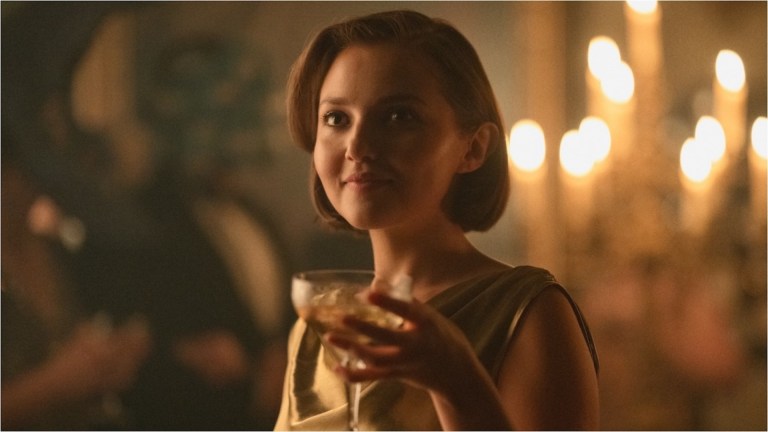
Netflix has added another Agatha Christie adaptation to its growing slate of literary mysteries with Seven Dials, a three-part miniseries that brings Christie’s interlinked novels The Secret of Chimneys and The Seven Dials Mystery to the streaming audience. At its heart is Lady Eileen Brent, nicknamed “Bundle” (Mia McKenna-Bruce), a plucky and perceptive young woman who must navigate murder, espionage, and family secrets while maintaining her characteristic charm.
In the vast and sometimes daunting world of Christie adaptations, where star-studded casts and elaborate plots can overwhelm audiences, Seven Dials distinguishes itself primarily through McKenna-Bruce’s luminous performance. While the series may occasionally feel stretched or bogged down by exposition, her presence keeps viewers invested and engaged.
A Star is Born: Mia McKenna-Bruce’s Breakout Performance
The series leans heavily on McKenna-Bruce to carry the story, and she does so with aplomb. At 28, the actress has already demonstrated her range in British indie films such as How to Have Sex, but in Seven Dials, she emerges as a true breakout star for a global audience. Her portrayal of Bundle balances wit, intelligence, and vulnerability, capturing the essence of Christie’s heroine while making her relatable to a 21st-century audience.
Bundle is defined by her resourcefulness and courage, yet McKenna-Bruce imbues her with a warmth and humor that elevate what could otherwise be a conventional mystery protagonist. Whether unraveling cryptic clues or navigating social minefields at a country estate party, she exudes a magnetic charisma that makes the audience care about every twist and turn of the narrative.
The Story: Mystery and Mayhem at Chimneys
Seven Dials opens with a prologue set in motion by the death of an unnamed character, portrayed by Iain Glenn, whose demise hints at a larger conspiracy. From there, the narrative swiftly moves to a stately but somewhat dilapidated English country house, Chimneys, where Lady Caterham (Helena Bonham Carter) and her daughter, Bundle, are guests at a society gathering.
Chimneys, once a symbol of grandeur, now shows signs of neglect—a reflection of the gentry’s waning fortunes post-World War I. Lady Caterham is portrayed with an expert aloofness by Bonham Carter, balancing her inherent gravitas with a weariness born of personal loss, including the death of her husband and son. Though her screen time is limited, her presence lends credibility to the story’s aristocratic milieu.
At the heart of the series’ intrigue is Gerry Wade (Corey Mylchreest), a charming acquaintance of Bundle whose flirtations hint at romance. The audience, along with Bundle, anticipates a proposal—but tragedy strikes when Gerry is found dead the next morning under suspicious circumstances. Suicide is suspected, yet Bundle’s curiosity and sharp instincts propel her to investigate, uncovering clues tied to the mysterious “Seven Dials.”
The Mystery Unfolds: Clues, Red Herrings, and Suspense
Christie’s narratives are famous for weaving intricate webs of deception, and Seven Dials honors that tradition while modernizing certain elements for a streaming audience. Bundle encounters a cast of potential suspects and allies: Jimmy (Edward Bluemel), Ronnie (Nabhaan Rizwan), and Bill (Hughie O’Donnell) all hover near the edges of suspicion, while Martin Freeman’s enigmatic figure, with his perpetually suspicious mustache, keeps viewers guessing. Even Nyasha Hatendi’s Dr. Matip, a Cameroonian scientist with a groundbreaking invention, adds layers of intrigue that touch on global stakes beyond the confines of Chimneys.
While the series occasionally leans too heavily on exposition—particularly in dialogue-heavy parlor scenes—director Chris Sweeney injects energy through inventive camera work and thoughtful production design. Locations like the Spanish town of Ronda, with its cobblestoned streets and arched doorways, provide visual relief from the stately but claustrophobic confines of Chimneys. Even digitally enhanced shots of 1920s London offer glimpses into a world that feels both familiar and slightly stylized, adding texture to the narrative without overwhelming it.
Ensemble Cast: Talent That Shines Despite Limitations
The supporting cast of Seven Dials is strong, though not always fully utilized. Bonham Carter’s Lady Caterham is captivating in moments of dialogue and quiet reflection, but she disappears for extended stretches, leaving the weight of the series on McKenna-Bruce’s shoulders. Freeman, meanwhile, appears to be setting up a more prominent role in a potential second season, his character lurking at the periphery rather than driving the story forward.
Rizwan, known for his standout performance in Netflix’s Kaos, brings energy and nuance to his role, while Mylchreest’s Gerry Wade is both charming and tragically fleeting. The rest of the ensemble, although capable, often falls into “stereotypical British” territory—aloof, reserved, or overtly eccentric. While Christie’s original works often relied on such archetypes, the screen adaptation sometimes struggles to expand these characters beyond surface-level traits, leaving viewers with limited options for surprise or misdirection.
Despite these limitations, McKenna-Bruce’s performance ensures that the story remains compelling. Her interactions with other characters feel natural, her detective instincts are believable, and her charm ensures that the audience remains invested even when the mystery itself slows.
Comparisons to Other Christie Adaptations
Netflix’s Seven Dials enters a crowded field of Christie adaptations, including Kenneth Branagh’s star-studded films (Murder on the Orient Express, Death on the Nile) and Rian Johnson’s Knives Out movies. What distinguishes Seven Dials is its intimacy and pacing. Unlike the Branagh films, which rely heavily on ensemble spectacle and glossy production values, this miniseries focuses on character-driven intrigue and atmosphere. Unlike Knives Out, which leans into modern humor and meta-commentary, Seven Dials remains rooted in early 20th-century propriety and period detail.
In some ways, the series’ brevity—three episodes totaling approximately three hours—mirrors Sherlock, the BBC’s adaptation of Arthur Conan Doyle’s stories. Like Sherlock, Seven Dials often leaves audiences wishing for more, ending just as momentum builds. Where Sherlock thrives on clever deductions and rapid-fire dialogue, Seven Dials leans on period charm, visual appeal, and McKenna-Bruce’s performance to maintain engagement.
Production Design and Cinematography: A Visual Feast
While Christie’s stories often take place in enclosed spaces—parlors, libraries, country homes—Sweeney and his team elevate the visual experience with careful attention to set design, costume, and location. Chimneys feels lived-in, simultaneously opulent and fading, reflecting the post-war decline of the British aristocracy. Spanish locations like Ronda provide a sense of scale and movement, while London sequences, augmented digitally, evoke the energy and unpredictability of 1925 urban life.
The series also employs subtle visual cues to support the mystery. Lighting, camera angles, and shot composition enhance tension during discovery sequences, while long tracking shots through cobbled streets or stately interiors create a sense of immersion. Even moments that rely on CGI—such as sweeping vistas of London rooftops—feel intentional, providing context and atmosphere rather than spectacle for its own sake.
Writing and Adaptation: Balancing Faithfulness and Accessibility
Chris Chibnall, known for his work on Doctor Who, serves as the series’ creator and primary adapter. His script preserves the spirit of Christie’s novels while streamlining certain plot elements for a modern audience. Complex subplots are condensed, and some minor characters are simplified or omitted to maintain narrative focus.
This approach has both benefits and drawbacks. On the positive side, the series is accessible to viewers unfamiliar with Christie’s work. McKenna-Bruce’s Bundle becomes the emotional and investigative anchor, guiding audiences through twists and red herrings without overwhelming them. On the downside, the reduction of plot complexity occasionally diminishes the challenge and suspense, making some revelations feel predictable.
Themes: Society, Class, and Post-War England
Beyond the central whodunit, Seven Dials engages with social and historical themes. The post-World War I setting underscores societal change: aristocratic families like the Brents face financial decline, while a younger generation navigates shifting social norms and global tensions. Science, espionage, and political intrigue intersect with personal relationships, reflecting Christie’s interest in both the macro and micro stakes of her stories.
Bundle herself embodies a progressive sensibility. She is independent, intelligent, and unafraid to challenge male authority figures, making her a refreshing protagonist in a genre sometimes dominated by male detectives or passive heroines. The series uses her perspective to explore issues of class, gender, and social expectation without heavy-handedness, creating a narrative that feels both period-authentic and relevant today.
Pacing and Tension: Strengths and Weaknesses
One of the challenges of adapting Christie for modern streaming audiences is pacing. The original novels often rely on gradual buildup, with extended expositions in parlors or drawing rooms. Seven Dials retains some of this structure, leading to moments that feel slower or more “laggy” than contemporary audiences may expect.
However, the series compensates with well-timed set pieces, plot twists, and location changes. The balance between confined estate scenes and expansive outdoor sequences maintains viewer interest. McKenna-Bruce’s energetic portrayal ensures that even slower scenes remain engaging, as her reactions and discoveries carry the emotional weight of the story.
Music and Atmosphere
The series’ score complements its visual and narrative elements. Period-appropriate instrumentation evokes the 1920s without overpowering the dialogue, while suspenseful motifs underscore moments of tension. Music cues subtly highlight clues, red herrings, and character revelations, enhancing the viewer’s immersion without feeling manipulative.
Netflix’s Christie Strategy: Positioning Seven Dials
Seven Dials fits neatly into Netflix’s broader strategy of adapting literary mysteries for a streaming audience. By offering concise, bingeable formats, the platform makes classic works accessible to viewers who may lack the patience for traditional, multi-season adaptations. Unlike sprawling multi-season series, a three-episode miniseries allows for a complete story arc while leaving room for potential sequels.
The series’ combination of period charm, visual appeal, and a strong lead performance positions it well alongside other Christie adaptations and mystery franchises. While it may not achieve the high-octane thrill of Knives Out or the narrative complexity of Kenneth Branagh’s films, it offers a compelling, digestible mystery that rewards both casual viewers and Christie enthusiasts.
Conclusion: Breezy, Elegant Entertainment Anchored by McKenna-Bruce
Ultimately, Netflix’s Seven Dials succeeds largely due to Mia McKenna-Bruce. Her portrayal of Bundle is magnetic, infusing wit, courage, and intelligence into every scene. While the series occasionally struggles with pacing, exposition, and underutilized supporting characters, McKenna-Bruce ensures that viewers remain invested in the story.
The production design, cinematography, and period detail create an immersive setting that complements the narrative, while the adaptation balances faithfulness to Christie with accessibility for modern audiences. Seven Dials is not a high-stakes thriller in the vein of Knives Out, nor is it as intellectually dense as Sherlock at its peak, but it is lively, enjoyable, and a showcase for a rising star.
For viewers seeking a stylish, character-driven whodunit, Seven Dials delivers. It may be short, occasionally stretched, and occasionally predictable—but it is also charming, visually engaging, and anchored by a performance that promises to define Mia McKenna-Bruce’s career for years to come.
Whether you are a Christie aficionado, a fan of period drama, or simply in the mood for a concise, engaging mystery, Seven Dials offers an elegant, breezy experience with a heroine you will not soon forget.