
Melania Review: A Gilded Void at the Centre of Power
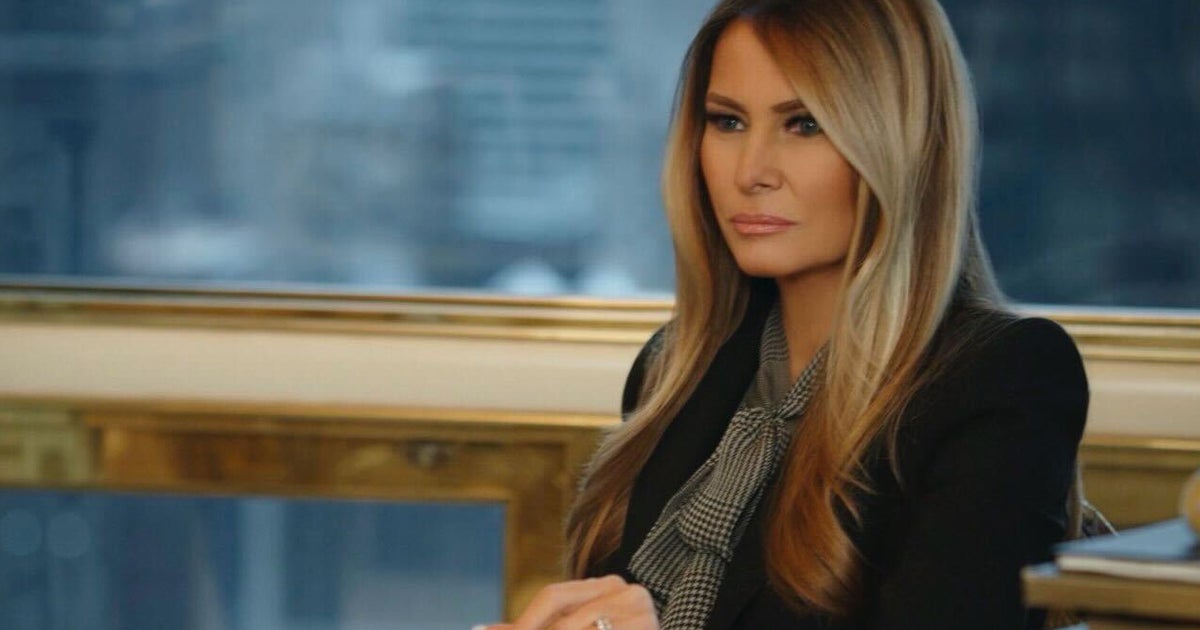
By the time Melania reaches UK cinemas, it arrives already burdened with expectation, controversy, and a curious sense of inevitability. A documentary about Melania Trump—former model, First Lady, and one of the most enigmatic figures ever to occupy the White House—ought to be fascinating by default. Hers is a life shaped by ambition, migration, image-making, and proximity to extraordinary political power. In the right hands, it could have been one of the defining political character studies of our era.
Instead, Brett Ratner’s Melania is something far stranger and far worse: a hollow, self-mythologising exercise that mistakes access for insight and luxury for meaning. It is not merely disappointing; it is actively unrevealing. Two hours spent in the company of its subject feels less like a journey into the inner life of a powerful woman and more like being trapped inside a refrigerated display case of wealth, ego, and denial.
This is not a documentary that interrogates. It curates. It embalms.
An Empty Theatre, an Emptier Film
There is something darkly appropriate about seeing Melania almost alone in a mid-morning screening at a retail-park cinema. When the film previewed at the White House just days earlier, the guest list glittered with celebrities, royalty, and political powerbrokers. Here, there is only one viewer and a cavernous auditorium, scrubbed clean and waiting. The contrast mirrors the film itself: a work designed for adulation, received instead in silence.
From the opening credits, the tone is set with unsettling clarity. Melania Trump, credited not only as the subject but as executive producer, leads the audience through preparations for her husband’s second presidential inauguration. The pace is glacial, the voiceover drained of warmth or spontaneity. She moves from couture fittings to floral arrangements, from candlelit dinners to the so-called “starlight ball,” narrating each step with the affect of someone reading aloud a luxury catalogue they did not write.
“Candlelight and black tie and my creative vision,” she intones, as if reciting a spell. The words hang in the air, weightless and inert.
It is here that the film reveals its fundamental problem: Melania is not interested in asking why. It is obsessed only with how things look.
A Documentary Without Curiosity
There is, undeniably, a compelling documentary to be made about Melania Knauss. Born in Slovenia, she moved through the fashion industry before marrying Donald Trump, entering a gilded New York world of real estate, celebrity, and ruthless ambition. Her ascent to First Lady placed her in a role historically defined by visibility, symbolism, and soft power—yet she remained aloof, silent, and often visibly uncomfortable.
That story cries out for interrogation. What did it cost her? What did she gain? How did she understand her role beside one of the most polarising political figures in modern history?
Ratner’s film asks none of these questions.
Instead, Melania presents its subject as an immaculately styled surface, drifting through spaces of immense privilege without friction or consequence. She talks constantly, yet says almost nothing. Her reflections are vague, platitudinous, and entirely unchallenged. When she claims that “children will always remain my priority,” the statement is offered without context, evidence, or contradiction. It floats by like another decorative centrepiece.
This is not observational filmmaking. It is decorative filmmaking.
The Sound of Sheet Metal
Melania Trump’s screen presence has always been unusual—remote, carefully controlled, and emotionally opaque. Here, those qualities are magnified to near-parodic effect. Her voiceover, delivered in flat, metallic tones, drains even potentially revealing moments of any human texture. She misses her mother. She likes Michael Jackson. She loves her son Barron. She may or may not love her husband.
None of it lands.
Donald Trump himself appears intermittently, like an unwanted cameo. He shuffles into frame to boast about his electoral victory or to complain that his inauguration clashes with college football playoffs. “They probably did it on purpose,” he grumbles, a line that might be darkly funny in another context but here simply underscores the film’s refusal to examine power with any seriousness.
Trump is treated not as a subject of scrutiny but as a background feature, a piece of furniture in the palace. His political agenda, his rhetoric, and the consequences of his leadership are almost absent. The effect is chilling—not because of what is shown, but because of what is so carefully excluded.
A Zone of Aestheticised Denial
It is impossible not to think of Jonathan Glazer’s The Zone of Interest while watching Melania, though the comparison is damning rather than flattering. Where Glazer used domestic banality to expose moral horror, Ratner uses luxury banality to obscure it.
Melania plays like a gilded trash remake of that idea: a button-eyed Cinderella pointing at dresses, fabrics, and gold accents while the machinery of political dismantling hums just out of frame. The camera lingers lovingly on designer gowns, manicured tables, and architectural splendour, as if beauty itself were a sufficient moral argument.
“White and gold—that’s so you,” coos one aide, as Melania nods approvingly. The line feels grotesque in its emptiness, yet it is emblematic of the film’s worldview: aesthetics over ethics, surface over substance.
Time, context, and consequence dissolve. History is reduced to décor.
Where Conflict Goes to Die
If Melania has a central dramatic tension, it is astonishingly trivial. Much of the film’s emotional energy is devoted to whether the first lady’s white blouse is too loose at the neck. There are tense discussions about cutting, tightening, and refitting. The stakes are treated as monumental.
This obsession with minutiae might have been revealing if framed ironically or critically. Instead, it is presented earnestly, as though these are the true pressures of power. The result is unintentionally absurd.
Real conflict—the kind that defines presidencies, reshapes nations, and alters lives—is nowhere to be found. Instead, we are invited to empathise with exhaustion, jet lag, and the strain of being awake for 22 hours straight.
“Being awake for 22 hours felt like nothing,” Melania gushes, near the film’s end. It is meant to signal triumph. It lands instead as a grotesque detachment.
Executive Producer as Shield
The film’s most damning quality is its total lack of friction. That Melania Trump serves as executive producer explains much, but not all, of this vacuum. Ratner appears less interested in journalism than in appeasement. The camera never pushes. The edit never questions. The structure never surprises.
Moments that might have cracked the façade—grief, doubt, resentment—are smoothed over before they can take shape. What remains is a kind of designer taxidermy: expensive, lifeless, and carefully posed.
In one sense, Melania is a remarkable achievement. It manages to spend nearly two hours with one of the most famous women in the world without revealing a single new truth about her inner life. That takes effort.
Spectacle Without Insight
The second inauguration, when it finally arrives, unfolds exactly as expected. There is tension about scheduling, relief when events proceed smoothly, and a closing sequence at the starlight ball where Melania briefly dances to the Village People’s “YMCA.” The moment is intended as catharsis.
It fails.
The guests are joyless, the energy flat, the spectacle inert. The film ends not with insight or revelation, but with exhaustion—both the subject’s and the viewer’s. Two hours feel endless, not because the material is challenging, but because it is so aggressively empty.
The Documentary That Isn’t
Does Melania even qualify as a documentary? Traditionally, the form implies inquiry, context, and a relationship to truth beyond self-presentation. This film offers none of that. It is closer to a promotional artefact, a vanity project masquerading as cinema.
That alone would make it forgettable. What makes it troubling is the historical moment it inhabits. At a time when political power, image management, and authoritarian aesthetics are deeply intertwined, Melania chooses to aestheticise silence rather than interrogate it.
It distracts while others act.
Final Verdict
Melania is dispiriting, deadly, and unredeemable. It wastes extraordinary access on banalities, substitutes luxury for meaning, and treats one of the most politically charged marriages in modern history as a lifestyle brand.
There is a great documentary to be made about Melania Trump—about ambition, migration, gender, power, and survival inside a gilded cage. This is not that film. This is the opposite: a smooth, ice-cold object designed to be admired, not understood.
You leave the cinema knowing no more about Melania Trump than when you entered—except perhaps this: silence, when curated and commodified, can be its own kind of violence.
Melania is out now.