
The Pitt’ Review: HBO Max’s Medical Drama Returns for a Second Season as Thrilling, Gory, and Oddly Comforting as the First
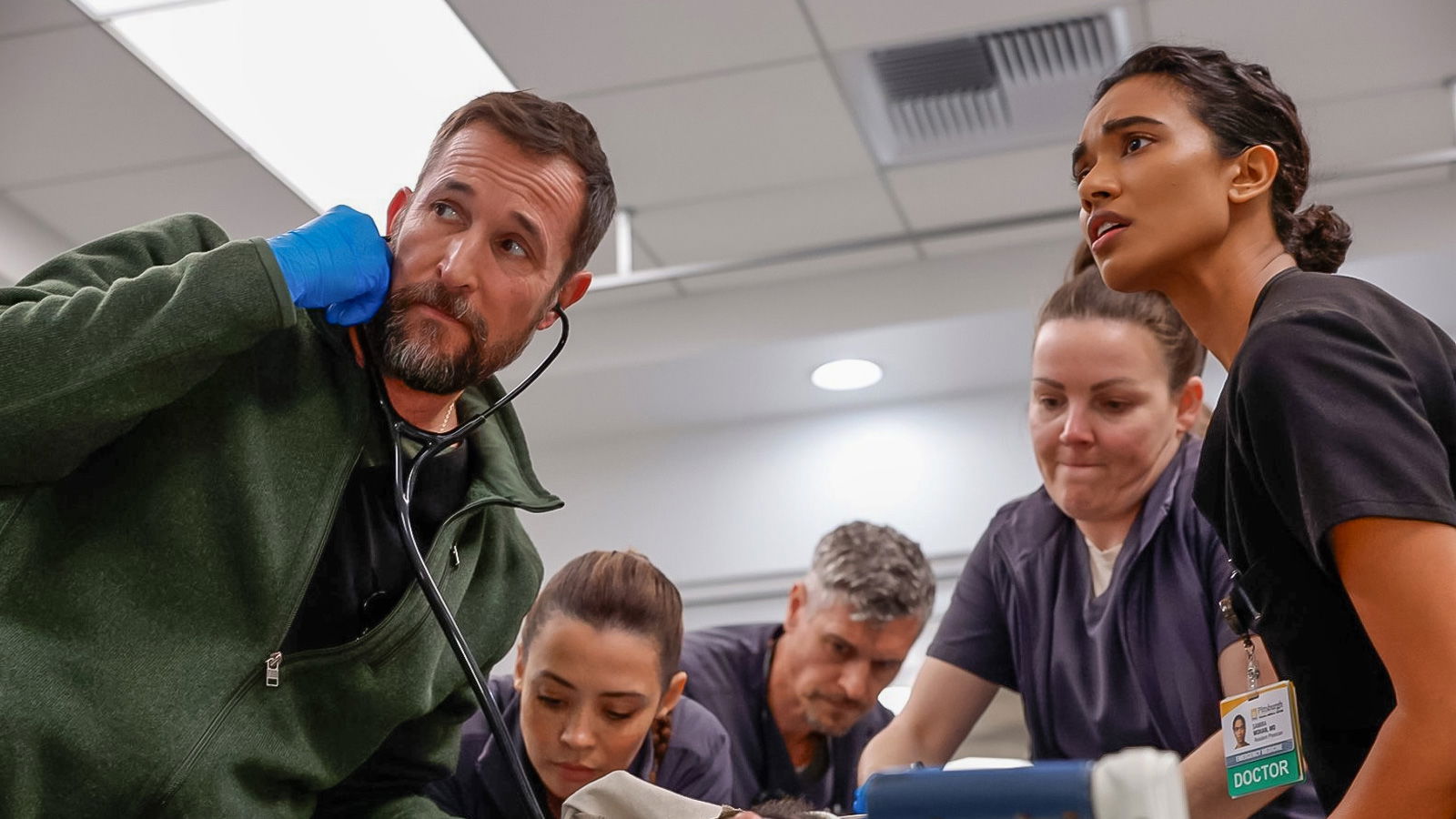
When HBO Max first launched The Pitt, audiences were introduced to a medical drama that defied conventional hospital storytelling. Created by R. Scott Gemmill, the series combined adrenaline-charged trauma sequences with deeply human character studies, threading humor, heartbreak, and moral complexity through its portrayal of Pittsburgh Trauma Medical Center (PTMC). Now, in its second season, the show returns with the same pulse-quickening energy, yet it has grown in confidence, nuance, and narrative ambition, proving that The Pitt is more than just a medical procedural—it is a meditation on human resilience in the face of chaos.
Midway through season two, one of the series’ central figures, Princess (Kristin Villanueva), a pragmatic and quick-witted nurse, offers a rare glimpse into how the characters survive the relentless pressures of PTMC. Leaning over a patient, she reveals her coping mechanism: “I go home at the end of every shift, leave all this behind… and escape to Love Island.” The line is unintentionally ironic, given that the show itself functions as a strange form of comfort viewing despite its graphic depictions of injuries, ethical dilemmas, and heartbreak. It is in these contradictions—the intersection of chaos and care, trauma and warmth—that The Pitt excels.
Consistency and Comfort Amid Chaos
Season two opens roughly ten months after the events of season one, and the series immediately re-establishes its signature rhythm. The emergency room is as frenetic as ever: gunshot wounds, fireworks-related mishaps on the Fourth of July, and a seemingly endless rotation of crises keep the doctors and nurses perpetually on edge. Yet beneath the surface chaos, the show demonstrates meticulous narrative editing, threading together multiple storylines with the precision of a symphony conductor guiding a complex orchestra.
Returning characters such as Dr. Robby (Noah Wyle), the moral anchor and senior attending, provide both continuity and emotional grounding. Robby embodies the series’ core philosophy: skill and knowledge alone do not make a great doctor; empathy, courage, and integrity are equally essential. Season two continues to explore these themes through Robby’s interactions with both patients and colleagues, creating a layered portrait of leadership under pressure.
The evolution of previously fresh-faced trainees—Santos (Isa Briones), Javadi (Shabana Azeez), and particularly Whitaker (Gerran Howell)—illustrates the show’s attention to character growth. Whitaker’s rise from nervous intern to competent, confident young doctor marks him as a symbolic heir to Robby’s mentorship, highlighting the theme of legacy and professional maturation. Meanwhile, former attending Dr. Langdon (Patrick Ball) attempts to redeem himself after rehab, showcasing the series’ commitment to second chances and personal evolution, even in a high-stakes environment.
Balancing Humanity and Medical Drama
One of the series’ most distinctive qualities is its ability to blend graphic medical realism with human warmth. The medical crises are often harrowing—severe injuries, terminal illnesses, and life-or-death decisions abound—but these moments are counterbalanced by humor, camaraderie, and glimpses of everyday humanity. Whether it is a flirtatious elderly patient refusing to let a fractured tailbone curtail his sex life or med students navigating awkward romantic entanglements, the show underscores the messy, unpredictable nature of human life.
Moreover, The Pitt does not shy away from sociopolitical commentary, though it avoids heavy-handedness. Storylines dealing with inadequate healthcare, as exemplified by Dr. Mohan’s (Supriya Ganesh) patient who refuses life-saving care due to financial constraints, or the consequences of mass deportations affecting a young patient left in a sibling’s care, are seamlessly integrated into the narrative. These moments highlight systemic issues without derailing the personal stories that make the series compelling.
The show also interrogates the intersection of medicine and technology. A recurring theme in season two is the pressure to adopt generative AI tools, juxtaposed against the necessity of human intuition in crisis situations. This tension is emblematic of a broader philosophical inquiry that runs throughout the series: how to reconcile technological advancement with the irreplaceable value of human judgment and empathy.
New Faces and Evolving Dynamics
While the returning characters are deeply familiar and fully realized, the introduction of new faces creates narrative tension and fresh perspectives. Med students Ogilvie (Lucas Iverson) and Kwon (Irene Choi) initially struggle to win audience affection. Unlike the first season’s trainees, whose learning curves mirrored those of the viewers, these new arrivals are positioned as outsiders navigating an established environment. Their integration serves both dramatic and comedic purposes, illustrating the challenges of assimilation in a high-pressure workplace.
Similarly, Dr. Al-Hashimi (Sepideh Moafi), a new attending brought in to temporarily replace Robby, provides a compelling foil. Her semi-radical methods provoke friction, especially with Robby, yet Moafi’s performance ensures that Al-Hashimi becomes a welcome and plausible addition, demonstrating the series’ skill in weaving new characters into an existing ensemble without disrupting its delicate balance.
The interplay between the old guard and newcomers emphasizes mentorship, adaptation, and the continual negotiation of authority and expertise—core themes that resonate not just in hospital dramas but in any high-stakes professional environment.
Narrative Structure and Pacing
The Pitt thrives in its episodic variety. Over the nine episodes released to critics, the series alternates between intense, life-threatening crises and quieter, character-driven moments. This duality keeps viewers engaged, ensuring that the pace never stagnates despite occasional narrative density.
The series also excels at layering multiple storylines without losing coherence. One episode might depict a terminally ill patient grappling with end-of-life decisions alongside a comical subplot involving sports-obsessed med students. Another might juxtapose the ethical dilemmas surrounding resource allocation against a personal romance or a mentor-protégé conflict. This narrative layering is part of the show’s charm—it mirrors the complexity, unpredictability, and emotional richness of real hospital life.
By balancing medical realism, emotional depth, and humor, The Pitt avoids the formulaic tendencies of conventional medical dramas. Its structure allows for emotional payoff and thematic resonance, ensuring that viewers feel invested not just in individual plotlines but in the broader trajectory of the hospital and its staff.
Thematic Resonance: Empathy, Ethics, and Humanity
At its core, The Pitt is a show about humanity under pressure. The series consistently emphasizes that medicine is not merely a technical endeavor; it is a profoundly human one. From Robby’s steady moral compass to Princess’s unassuming pragmatism, the show portrays healthcare professionals as complex individuals navigating moral, emotional, and social challenges.
The series also interrogates the consequences of systemic failures. Patients confronting financial barriers, families fractured by social upheaval, and med students unprepared for ethical gray zones all contribute to a tapestry that reflects real-world healthcare complexities. Yet, despite these challenges, the series maintains a tone of cautious optimism, suggesting that human ingenuity, empathy, and courage can prevail even amid chaos.
Technology, too, is treated with nuance. The second season explores AI-driven diagnostics, administrative algorithms, and the potential dehumanization of care. By weighing the advantages and limitations of these tools, the show prompts viewers to consider how human judgment complements—and sometimes surpasses—technological intervention, reinforcing one of its central theses: care is a human, not purely technical, endeavor.
Performances That Anchor the Series
Noah Wyle continues to be the series’ linchpin. Robby is not a perfect character; his flaws, internal conflicts, and occasional blind spots make him relatable and compelling. Wyle’s performance conveys both authority and vulnerability, providing a consistent emotional anchor for the ensemble cast.
Kristin Villanueva’s Princess, Gerran Howell’s Whitaker, Isa Briones’ Santos, and Shabana Azeez’ Javadi offer nuanced, layered performances that reflect the multifaceted nature of trauma medicine. New additions Sepideh Moafi and Lucas Iverson eventually find their footing, complementing the established cast while introducing fresh tension and narrative potential.
Collectively, the ensemble captures the chaotic, messy, and profoundly human nature of medical work, ensuring that even amid gory procedures and high-stakes crises, the audience remains invested in the characters’ lives.
Visual and Technical Craft
The show’s visual language reinforces its thematic ambitions. The editing is fluid and precise, guiding viewers through multi-threaded scenes without confusion. The cinematography balances intimacy—close-ups on characters’ emotional responses—with the sprawling, chaotic energy of trauma rooms. The result is a visual rhythm that mirrors the ebb and flow of hospital life, alternating between frenetic action and quiet introspection.
Sound design and scoring complement the visual approach, heightening suspense during emergencies and softening during human, emotional moments. The overall production design emphasizes realism without descending into gratuitous sensationalism, grounding the series in a believable, immersive world.
Conclusion: A Medical Drama That Heals and Thrills
The second season of The Pitt reaffirms the series as HBO Max’s premier medical drama, blending thrilling medical emergencies with deeply human stories of growth, ethics, and empathy. While minor quibbles—such as the initial friction with new characters or the slow introduction of new thematic arcs—exist, they pale in comparison to the series’ strengths: compelling storytelling, intricate character work, moral resonance, and unflinching yet humanizing portrayals of trauma medicine.
In a media landscape crowded with formulaic hospital dramas, The Pitt distinguishes itself through its balance of gore and warmth, tension and humor, ethical dilemmas and personal evolution. It reminds viewers that even amid chaos, there is humanity, courage, and the possibility of connection.
For audiences seeking a medical drama that is thrilling, emotionally resonant, morally intricate, and, paradoxically, comforting, the second season of The Pitt delivers in spades. It is a series that does not shy away from the darkest moments of human experience yet finds light in compassion, professionalism, and the enduring bonds formed in life-or-death circumstances.
As the season continues and new episodes unfold, one can expect more ethical quandaries, personal triumphs, and tense, life-altering crises, further cementing The Pitt as a standout in contemporary medical storytelling—an experience that entertains, challenges, and, above all, reminds us of the enduring power of care.