
The SpongeBob Movie: Search For SquarePants Review
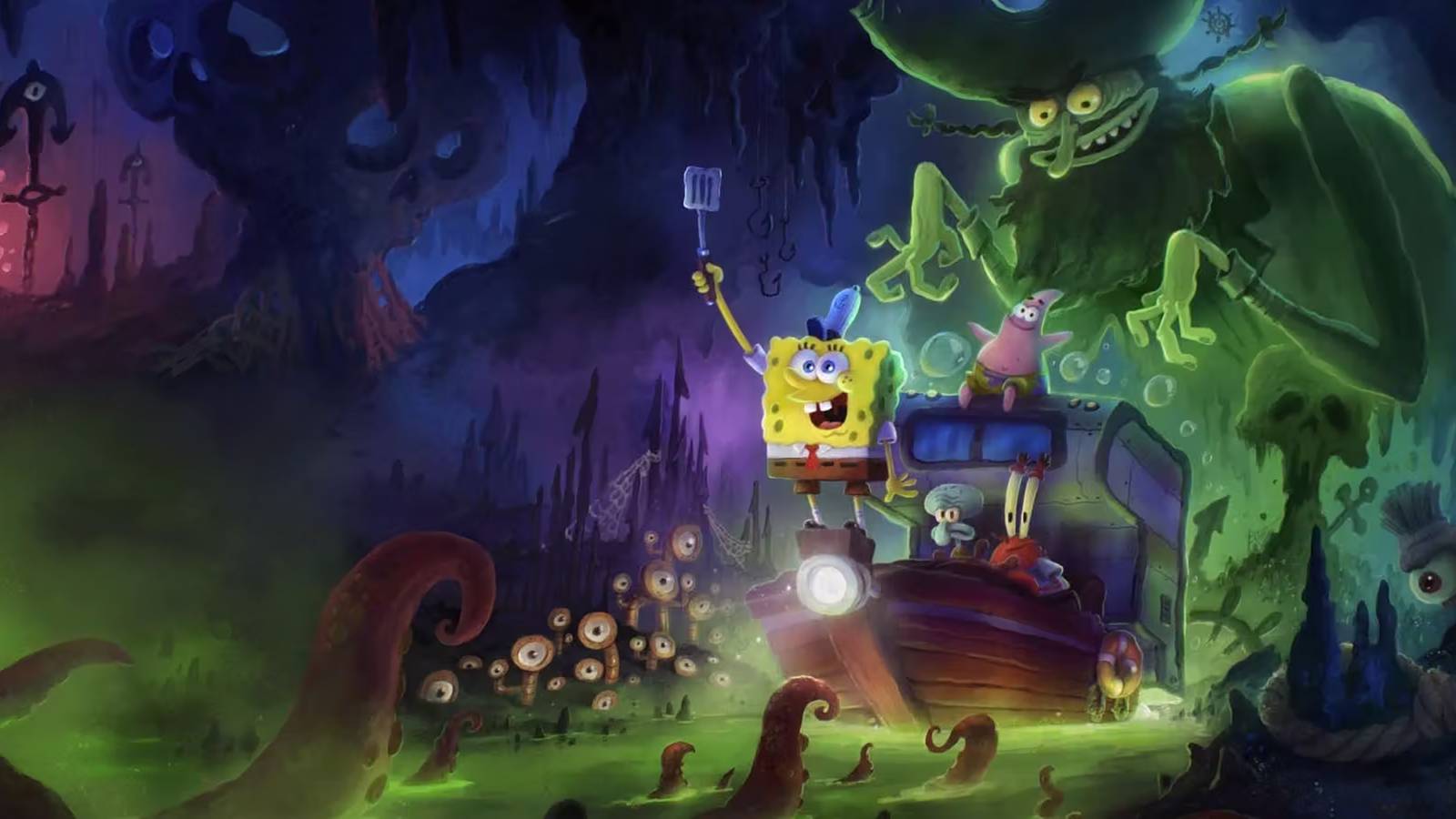
Roughly every five years, like a neon-bright tide rolling back into multiplexes, a SpongeBob SquarePants movie surfaces to remind us that children’s cinema can be equal parts sugar rush and endurance test. The SpongeBob Movie: Search For SquarePants continues that tradition with a familiar cocktail of manic energy, elastic logic, and cheerful idiocy, offering a hallucinatory adventure that will delight its core audience while leaving many adults blinking, dazed, and reaching for the nearest cup of water. This is a film that knows exactly what it is, for better and worse, and has little interest in expanding beyond the boundaries that have defined SpongeBob’s big-screen outings for two decades.
At the heart of the story is SpongeBob himself, voiced once again by the indefatigable Tom Kenny, whose performance remains one of modern animation’s minor miracles. SpongeBob’s voice is a tightrope act: too much shrill enthusiasm and it becomes unbearable; too little and the character loses his defining spark. Kenny still nails the balance. Here, SpongeBob is wide-eyed and awestruck as he listens to his boss, Mr Krabs (Clancy Brown), recount tales of a supposedly swashbuckling youth filled with danger, daring, and heroic feats. To SpongeBob, Mr Krabs is not merely an employer but a living legend, a crustacean embodiment of everything brave and bold. Unsurprisingly, SpongeBob wants in.
That desire—to become a “big guy,” to live up to an idealized version of heroism—kicks off the film’s narrative. Alongside his loyal and dim-witted best friend Patrick Star (Bill Fagerbakke), SpongeBob blows an enchanted horn that summons the Flying Dutchman, a ghost pirate voiced with gravelly relish by Mark Hamill. Hamill’s casting is inspired in theory: few actors can switch so effortlessly between campy menace and self-aware absurdity. The Dutchman is meant to be both mentor and menace, promising to teach our heroes the art of swashbuckling while secretly plotting to use their quest to escape his own cursed fate.
As with most SpongeBob movies, the plot functions less as a story to be followed than as a clothesline on which to hang jokes. The narrative is deliberately threadbare, a flimsy structure designed to support a relentless barrage of gags, faces pulled to impossible extremes, and extended riffs that feel more like sketch comedy than traditional storytelling. The filmmakers know that their audience—primarily children hopped up on slushies and popcorn—are not here for narrative coherence. They are here for noise, color, and chaos.
In that regard, Search For SquarePants largely delivers. The film rarely pauses for breath. Characters bounce from one predicament to another with rubbery resilience, surviving underworld banishments and supernatural double-crosses through sheer optimism and an uncanny knack for dumb luck. SpongeBob’s defining trait—his unshakeable good nature—once again proves to be both his greatest strength and the source of endless irritation for his enemies. He doesn’t outsmart villains in any conventional sense; he simply outlasts them, wearing down their cynicism with relentless positivity.
Yet there is a sense, particularly for viewers who have followed SpongeBob’s cinematic history, that this adventure feels a touch flatter than what came before. Previous films benefited from moments of genuine, inspired weirdness: celebrity cameos that felt surreal rather than obligatory, visual jokes that lingered in the memory long after the credits rolled. Here, conspicuously, there are no demented star turns of that caliber. The absence is noticeable. Without those unexpected flourishes, the film leans heavily on familiar rhythms and well-worn character beats.
That familiarity cuts both ways. On one hand, longtime fans will appreciate the comfort of returning to a world that operates by its own gleefully illogical rules. On the other, the lack of novelty can make the experience feel repetitive, especially for adults who have already sat through multiple SpongeBob movies. The jokes land, but many land in ways that feel safe, almost routine. You laugh because you recognize the pattern, not because the film has genuinely surprised you.
The animation style reflects this tension between energy and complacency. The visuals are bright, fluid, and unapologetically cartoonish, with characters stretching and squashing in ways that defy physics and anatomy. There is a tactile quality to the animation that recalls the show’s early seasons, an emphasis on exaggerated expressions and quick visual punchlines. At the same time, the film rarely pushes its aesthetic into new territory. The underwater world, the surface world, even the supernatural realms visited along the way all feel like variations on settings we’ve seen before.
SpongeBob himself remains the franchise’s secret weapon. His blend of finely judged stupidity and sincere kindness is still oddly disarming. The character’s appeal has always rested on a paradox: he is absurdly incompetent and endlessly annoying, yet fundamentally decent in a way that makes it difficult to root against him. The film wisely resists any temptation to force growth or emotional learning onto him. As with Seinfeld, the unspoken rule applies: no learning. SpongeBob does not evolve, mature, or become wiser. He simply persists.
That said, persistence alone cannot carry a feature-length film indefinitely. While things happen almost constantly, there is little sense of escalation. The challenges SpongeBob faces never feel particularly daunting, and the stakes remain low even by children’s movie standards. The Flying Dutchman, despite Hamill’s enthusiastic performance, lacks the bite to function as a truly memorable antagonist. He is more grumpy than frightening, more put-upon than threatening. His plan to double-cross SpongeBob and Patrick feels perfunctory, a narrative obligation rather than a source of genuine tension.
Patrick, meanwhile, is very much Patrick: loyal, oblivious, and capable of derailing any situation through sheer stupidity. Bill Fagerbakke continues to deliver his lines with deadpan sincerity, and the character remains a reliable laugh generator. However, like SpongeBob, Patrick is not given anything particularly new to do. His jokes are variations on familiar themes, and while they work in isolation, they contribute to the overall sense that the film is content to tread water.
Clancy Brown’s Mr Krabs adds a touch of gravitas, anchoring the opening act with his larger-than-life stories of adventure. Brown’s voice work imbues the character with a booming authority that contrasts nicely with SpongeBob’s squeaky enthusiasm. Yet Mr Krabs largely recedes once the quest begins, his role confined to motivating the plot rather than shaping it. This is a missed opportunity; the dynamic between SpongeBob’s idealism and Mr Krabs’ self-serving pragmatism has always been fertile comedic ground.
For all its manic energy, the film occasionally betrays a lack of confidence in its own material. Scenes pile jokes upon jokes, as if afraid that any single gag might not be enough to hold attention. This creates a numbing effect, particularly for adult viewers. The relentless pace leaves little room for quieter moments or visual humor that needs time to breathe. Exhaustion sets in not because the film is bad, but because it refuses to slow down.
And yet, it would be unfair to judge Search For SquarePants solely by adult standards. This is, unapologetically, kids’ cinema. Its primary mission is not to impress critics or innovate within the medium, but to entertain a young audience for 90 minutes. Judged on those terms, it succeeds more often than not. Children are likely to revel in the nonstop silliness, the bright colors, and the comforting familiarity of characters they already love. Die-hard SpongeBob fans, regardless of age, may find joy simply in spending more time in Bikini Bottom’s extended universe.
There is also something quietly admirable about the franchise’s refusal to grow up. In an era when many long-running properties feel pressure to darken, deepen, or “reboot” themselves for older audiences, SpongeBob remains steadfastly silly. The film does not attempt to smuggle in heavy themes or emotional arcs disguised as depth. Its worldview is simple: be kind, be enthusiastic, and annoy your enemies into submission through relentless cheerfulness.
That simplicity, however, comes at the cost of memorability. When the credits roll, there are few moments that linger in the mind. The jokes blur together, the set pieces fade, and the adventure as a whole feels less like a distinct chapter and more like an extended episode with a bigger budget. This is not necessarily a failure, but it does suggest a ceiling that the franchise is increasingly reluctant—or unable—to break through.
Ultimately, MLWBD The SpongeBob Movie: Search For SquarePants Review comes down to expectations. If you are seeking inventive madness on the level of the series’ most inspired moments, you may leave disappointed. If you are an adult accompanying children, you may find the experience more tiring than enjoyable, punctuated by the occasional chuckle rather than sustained laughter. But if you are a child, or a devoted fan who knows exactly what SpongeBob brings to the table and wants more of it, the film offers a dependable, brightly colored escape.
SpongeBob SquarePants has endured because it understands its own appeal. It is not clever in a traditional sense, nor is it interested in prestige. Its humor is broad, its characters are exaggerated, and its stories are gloriously inconsequential. Search For SquarePants does not reinvent that formula, but it doesn’t betray it either. It is another lap around a familiar track, run with the same manic grin as ever.
In the end, the film is exactly what it promises: a relentlessly cheery fry cook out-dimwitting a dastardly foe through sheer optimism. It may not chart new waters, but it keeps afloat on the strength of a character who, against all odds, remains as indestructible as the sponge he’s named after.