
mlwbd movie reviews: Now You See Me: Now You Don’t Review – Magic, Mayhem, and CGI Overload
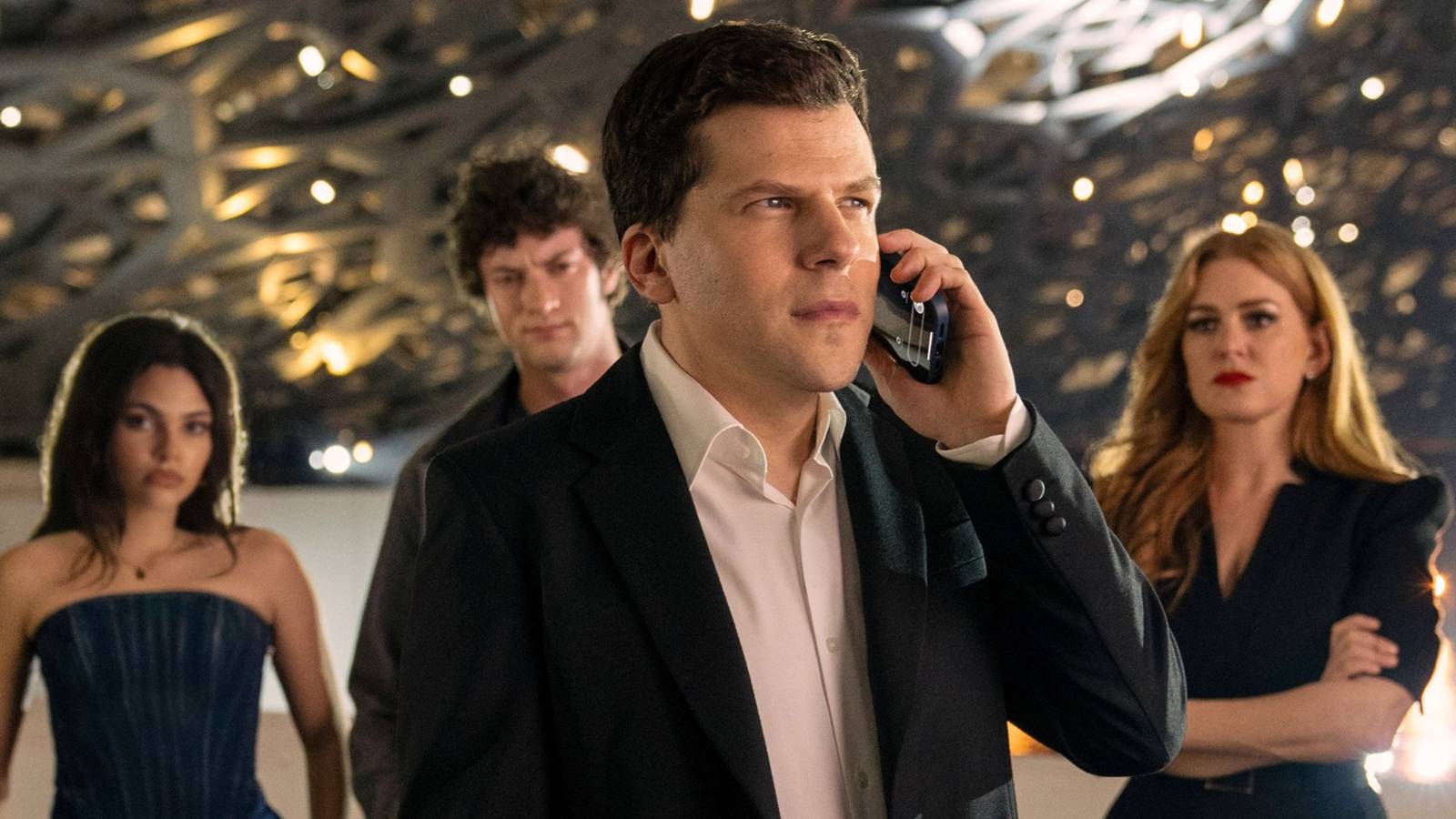
Cinema has always flirted with the impossible. From high-concept science fiction to the audaciously improbable heist film, there is a genre of movies that ask audiences to suspend disbelief, to momentarily step into worlds that defy logic yet delight in spectacle. The Now You See Me franchise, with its blend of magic and crime, sits squarely in this tradition. The films present a universe where magicians are not merely entertainers but master criminals, capable of grand heists performed under the rapt gaze of thousands in stadiums, with the efficiency of criminal masterminds and the flair of illusionists. It is a premise so improbable it is almost charming.
Yet, after nearly a decade since Now You See Me 2 (2016), the franchise returns with Now You See Me: Now You Don’t, and the charm of improbable capers has dimmed somewhat, replaced by the hallmarks of CGI excess, convoluted plotting, and a reliance on spectacle over substance.
Returning to the Spotlight: The Four Horsemen
The core of the franchise, the Four Horsemen, returns to the limelight, now expanded in number, as the film’s opening moments emphasize the familiar mantra of the series: “Everything that disappears, reappears.” Jesse Eisenberg’s J. Daniel Atlas delivers the line with his characteristic smirk, but the irony is unavoidable. While the characters themselves return, the narrative magic feels less tangible than before.
Alongside Atlas are old favorites: Woody Harrelson’s hypnotist Merritt McKinney, Isla Fisher’s escape-artist-turned-assistant Henley Reeves, and Dave Franco’s card-shuffling sleight-of-hand specialist Jack Wilder. Together, these performers create the illusory backbone of the film. Yet for all their charisma, the magic on display is increasingly divorced from the mechanics of reality, relying heavily on CGI to simulate impossibilities that would, even in their first outings, have strained credulity.
New Blood: Gen-Z Magicians Step Up
To rejuvenate the franchise and appeal to younger audiences, Now You See Me: Now You Don’t introduces three new magicians: Justice Smith, Ariana Greenblatt, and Dominic Sessa. Each character brings fresh energy and skill sets, designed to appeal to the sensibilities of a Gen-Z audience. Their narrative function is to inject vitality into the heist ensemble, providing comic relief, fresh dynamics, and the occasional nod to contemporary cultural touchstones.
However, despite the talent on display, their integration feels at times perfunctory, with the film struggling to give these characters sufficient narrative weight or personality depth. The interactions between the veterans and new recruits are charming in moments but often feel like obligatory inclusions designed to modernize the franchise rather than enrich its storytelling.
The Villain: Rosamund Pike’s Over-the-Top Performance
No Now You See Me installment is complete without a flamboyant antagonist, and Rosamund Pike’s Veronika Vanderberg fills this role with gusto. A diamond heiress with an extravagant sense of self and an exaggerated accent, Pike channels her early Bond-villain energy, reminiscent of Die Another Day, complete with an aura of theatrical menace. While her performance is undeniably committed, it leans heavily into caricature, further amplifying the film’s already cartoonish tone. Vanderberg is as ostentatious as she is improbable, a foil for the Horsemen whose schemes rely more on narrative convenience than on authentic challenge.
Magic Versus Reality: Suspension of Disbelief Tested
The Now You See Me franchise has always required a generous suspension of disbelief. In previous installments, audiences were invited to marvel at magicians capable of executing elaborate heists in front of stadiums, tricking not only law enforcement but also the viewing public. This suspension, while essential to the enjoyment of the films, has limits, and Now You See Me: Now You Don’t tests them rigorously.
The illusions in this third installment often exceed even the generous bounds of cinematic magic. Sequences that require vast amounts of CGI create a sense of weightlessness, undermining the tactile thrill that earlier films managed to sustain through practical stunts combined with visual trickery. While spectacle abounds, the tactile engagement—the sense that these tricks could almost exist in reality—is lost. This is particularly evident in the film’s grand set pieces, where visual creativity is impressive, but narrative plausibility is not.
Historical Hijinks and Narrative Absurdity
Among the more eyebrow-raising elements is the film’s flirtation with historical fiction. At one point, the Horsemen attribute a significant portion of World War II’s outcome to the exploits of real-life magician Jasper Maskelyne. The historical Maskelyne did indeed work with the British military on deception projects, but the film’s suggestion that he “conquered the Nazis” ventures into hyperbolic comedy, raising questions about the film’s relationship with reality. While clearly intended as tongue-in-cheek, these claims contribute to a narrative dissonance that may alienate viewers seeking even a modicum of logical consistency.
Dialogue throughout the film is similarly uneven. Leaden jokes and awkward exchanges punctuate moments of high tension, creating a dissonant rhythm. Humor, often the franchise’s saving grace, is hit-or-miss, with only sporadic laughs emerging from absurdist situations or visual gags.
Visual Spectacle: A Double-Edged Sword
Where the film excels is in its visual inventiveness. From M.C. Escher-inspired staircases to Inception-style rotating corridors, the film’s set design and CGI work combine to create sequences reminiscent of elaborate escape rooms. Perspective tricks, optical illusions, and grandiose, physics-defying stunts recall both the ingenuity of the first two films and their cinematic forebears, from Mission: Impossible to Toy Story 3.
Yet the same visual bravado highlights the film’s shortcomings. The heavy reliance on CGI, while enabling impossible stunts, sometimes undermines tension. Moments that should induce awe or suspense instead feel weightless, their impact diluted by digital overindulgence. The balance between practical magic, narrative stakes, and visual effects—a delicate equilibrium the first two films occasionally achieved—is often absent here.
Nostalgia Factor and Franchise Fatigue
Part of the allure of Now You See Me: Now You Don’t lies in nostalgia. Returning audiences are treated to familiar faces, repeated motifs, and callbacks to earlier heists. These moments evoke a sense of continuity and reward long-term fans. Yet nostalgia alone cannot compensate for narrative weaknesses or tonal inconsistencies.
The film occasionally verges on self-parody, with sequences that feel more like affectionate riffs on the franchise than coherent storytelling. In this sense, it evokes comparisons to Austin Powers: Goldmember—a film that delights in its own silliness, yet suffers from an uneven execution. The third Now You See Me installment exhibits similar tendencies: a fond, occasionally hilarious embrace of franchise quirks, paired with a narrative that struggles to cohere.
Performances: A Mixed Bag
The ensemble cast delivers varying degrees of success. Eisenberg remains a reliable presence, his intellectual energy grounding the absurdity of the plot. Harrelson continues to offer comedic relief with a sly sense of timing, while Fisher’s Henley Reeves remains charmingly earnest. Franco’s Wilder, with his flair for sleight-of-hand humor, complements the ensemble.
Among the newcomers, Justice Smith and Ariana Greenblatt show potential, though the script does not always allow them the depth to shine. Dominic Sessa, similarly, is serviceable but underdeveloped. Pike’s performance, while vivid, risks tipping into parody, highlighting a tension between commitment to character and the demands of exaggerated spectacle.
Themes and Subtext: Lighthearted or Hollow?
The Now You See Me films have always been light on political or philosophical subtext, instead focusing on cleverness, ingenuity, and showmanship. This third installment continues that tradition but occasionally flirts with thematic overreach. References to history, the ethics of magic as a tool for criminal ends, and the power dynamics between veterans and novices offer fleeting depth but are underexplored. The film ultimately prioritizes spectacle over substance, delivering entertainment that is sometimes thrilling, often silly, but rarely profound.
Audience Reception: Fun or Frustrating?
Now You See Me: Now You Don’t will likely divide audiences. Fans of the franchise may revel in the return of beloved characters, elaborate illusions, and meta-cinematic references. Casual viewers, or those expecting the cleverness and coherence of the first film, may find the third installment overstuffed, visually excessive, and narratively thin.
The film’s reliance on CGI-heavy illusions, coupled with a plot that occasionally strains credulity, tests the suspension of disbelief that has always been central to the franchise’s appeal. Humor is uneven, stakes are inconsistent, and the narrative, while energetic, sometimes feels secondary to spectacle.
Conclusion: A Rabbit Best Left in the Hat
Now You See Me: Now You Don’t offers a familiar mix of flashy illusions, heist antics, and ensemble charm. However, it struggles to balance spectacle with narrative coherence, resulting in a film that is fun in places, frustrating in others, and ultimately a reminder that even the most charming franchises cannot rely on charm alone.
The film’s strengths—visual creativity, committed performances, and the return of fan-favorite magicians—are undeniable. Its weaknesses—CGI overindulgence, uneven humor, and narrative implausibility—prevent it from fully capturing the magic of its predecessors. In the end, it is a film that offers a nostalgic nod to the franchise, but lacks the cleverness and emotional engagement that made the first two films unexpectedly delightful.
Verdict: ★★★☆☆
A visually inventive, occasionally funny, and nostalgically charming return of the Four Horsemen, but one whose reliance on CGI and implausible plotting dilutes the magic. A rabbit perhaps better left in the hat.